
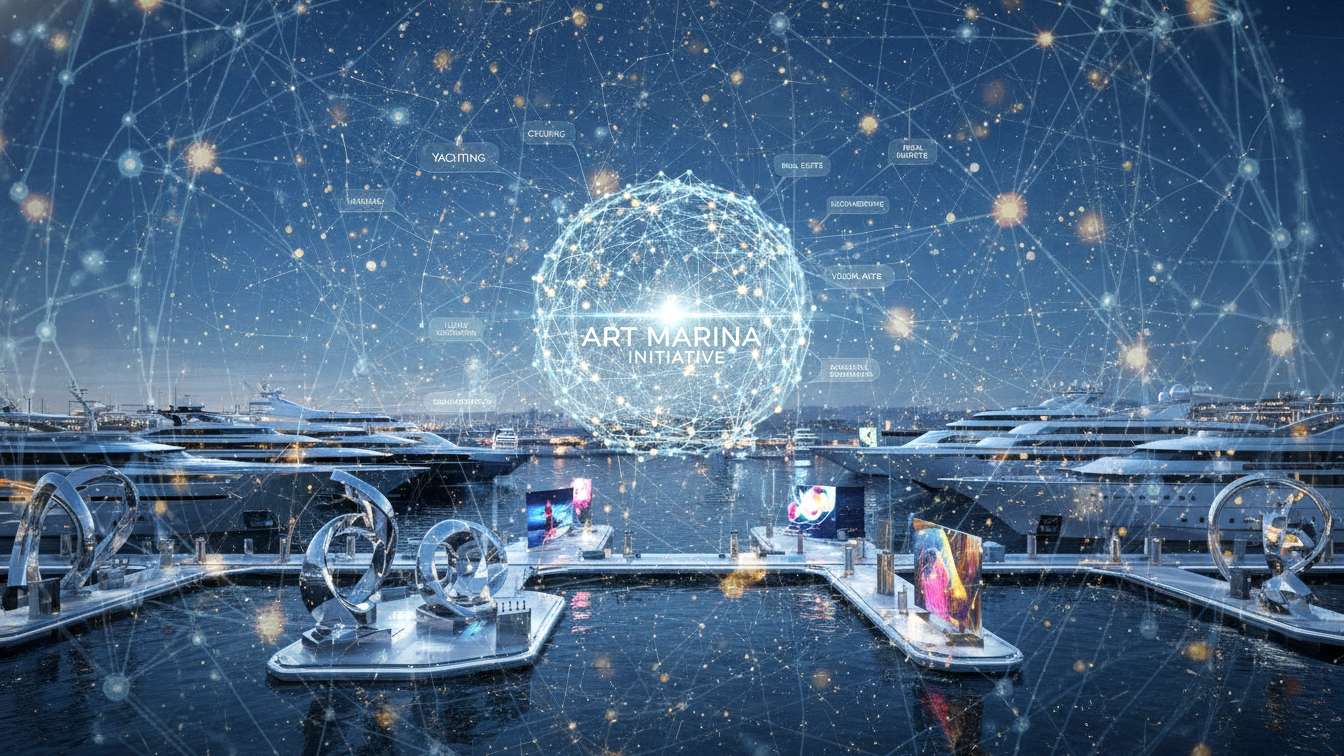
A New Cultural Typology for Marinas
Marinas across the world are entering a new era. They are no longer defined solely by berths, services or waterfront real estate, but by the cultural, aesthetic and symbolic value they project. EURAN Marina Prototype 226 introduces a new typology for marinas worldwide: a transformation model that elevates a marina from a functional harbor to a cultural landmark, a strategic identity engine and a refined environment aligned with the expectations of the global superyacht community. It positions the marina as a place where nautical excellence, cultural intelligence and aesthetic governance converge into a coherent, elevated experience.
This prototype completes the maritime architecture initiated by the EURAN Mega Yacht Prototype 226, forming a unified cultural ecosystem between sea and shore, where vessels and marinas participate in a shared cultural language. The marina is no longer a neutral backdrop to the superyacht world; it becomes an active cultural actor, capable of hosting, framing and amplifying the values, rituals and aesthetics of contemporary yachting culture.
Strategic Foundations
The global waterfront is undergoing a generational transformation. Hospitality, architecture, culture and yachting now intersect in ways that demand coherence, narrative and institutional credibility. A marina adopting Prototype 226 becomes a cultural axis of its region, a symbolic reference point for visitors, a trusted environment for superyacht owners and a platform for curated experiences that extend beyond seasonality. It is no longer a passive infrastructure but an active cultural and strategic interface between land and sea.
This transformation is not decorative; it is structural. It redefines what a marina is, how it behaves and how it is perceived. It introduces a cultural identity that is not an aesthetic layer but the core operating principle shaping every aspect of the marina’s presence, from its nightscape to its collaborations, from its public spaces to its private engagements. The marina becomes functionally strict, aesthetically guided, institutionally aligned and culturally expressive, capable of sustaining long‑term partnerships with owners, brands and institutions.
Cultural Identity of the Marina
The cultural identity of a marina is the foundation of Prototype 226. It determines how the marina is experienced, how it communicates and how it aligns with the values of the superyacht world: privacy, precision, discretion and aesthetic intelligence. Under this model, the marina becomes a place where the rhythms of the sea meet the rhythms of curated cultural life, where architectural sensitivity shapes the visitor’s path and where every gesture—light, material, narrative—contributes to a coherent identity.
This identity is not an afterthought. It is the anchor for all programs and partnerships, ensuring that the marina speaks with clarity and purpose. It allows the marina to differentiate itself in a competitive landscape where destinations are no longer judged only by their infrastructure, but by the depth, coherence and credibility of their cultural presence. Prototype 226 gives the marina a voice that is recognisable, consistent and aligned with international standards of cultural governance.
The EURAN Marina Prototype 226
EURAN Marina Prototype 226 introduces a complete cultural architecture for marinas worldwide. It transforms the marina into a symbolic gateway, a curated environment and a cultural institution capable of hosting refined experiences that resonate with owners, visitors and partners. The prototype integrates the discreet world of superyachts with the public dimension of waterfront life, creating a balanced ecosystem where privacy and visibility coexist with elegance.
It establishes the marina as a place where cultural capital is not an accessory but a structural asset, where the values of the maritime world are translated into a coherent aesthetic language and where the marina becomes a reference point for international collaboration, sponsorship and cultural presence. Prototype 226 is conceived as a prototype in the strict sense: a model that can be adapted, replicated and scaled across different geographies while preserving its core principles of discretion, precision and cultural depth.
Cultural Programs as Architectural Extensions
The transformation of the marina unfolds through a series of cultural programs that act as architectural extensions of its identity. These programs are not isolated events or decorative installations; they are structural components of the marina’s cultural architecture. They include the discreet documentation of art aboard superyachts, the recognition of excellence in maritime art, the creation of a poetic nightscape through architectural light, the activation of curated micro‑spaces that blend design and narrative and the development of refined encounters with luxury brands.
Each program reinforces the marina’s identity, deepens its cultural presence and creates a rhythm of engagement that is both seasonal and continuous. Together, they form a living cultural ecosystem that evolves with precision and intention. The marina becomes a place where cultural programming is not an occasional addition but a continuous, carefully governed practice that shapes its reputation and its relationships with owners, visitors and partners.
The Cultural Registry of Art at Sea
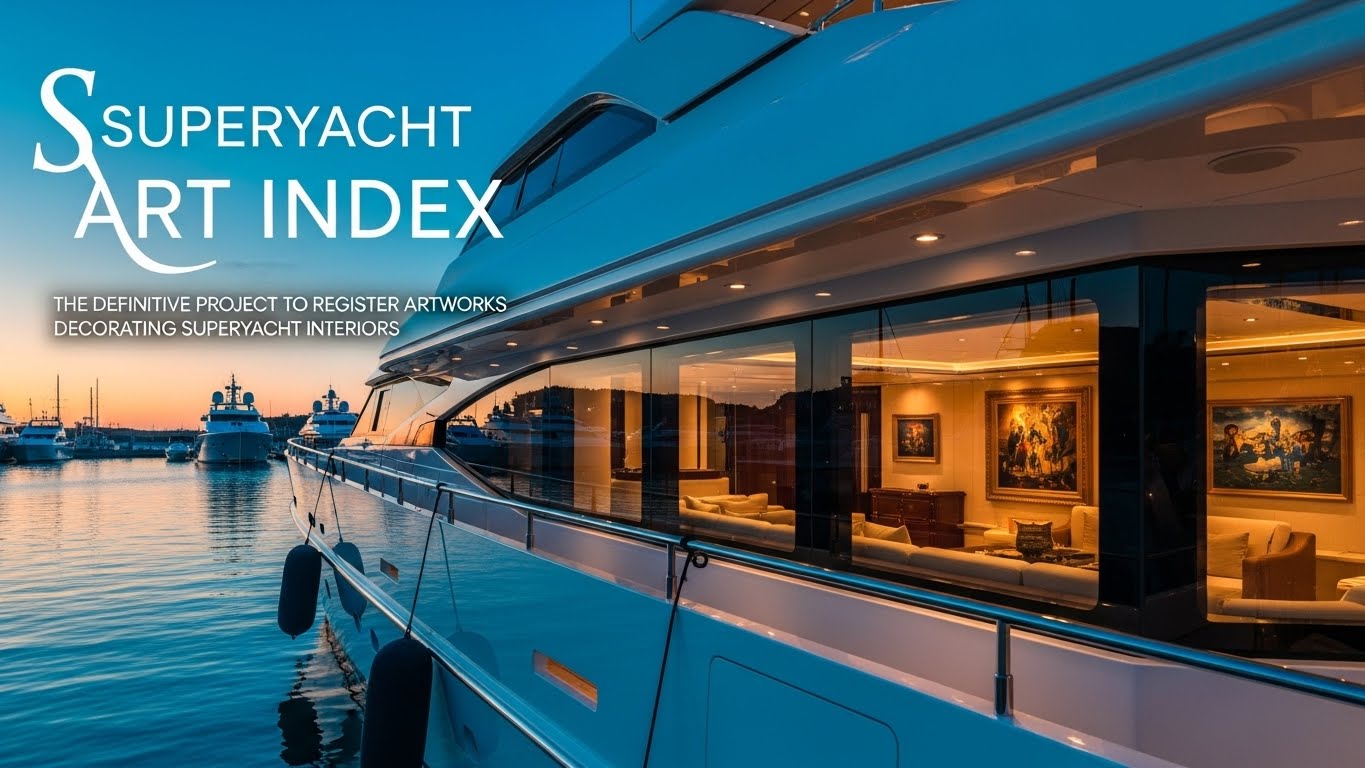
One of the defining elements of Prototype 226 is the creation of a cultural registry for art aboard superyachts. Art aboard vessels is often invisible—privately installed, undocumented, architecturally significant. The registry transforms these private collections into recognized cultural contributions without compromising privacy. It introduces a discreet system of documentation, classification, conservation guidance and narrative framing that respects the intimacy of onboard display while acknowledging its cultural value.
Through private consultations, conservation advisory and aesthetic guidance, the marina becomes a global curator of maritime art, building trust with owners and establishing itself as a reference point for cultural excellence. The registry is complemented by an annual recognition of excellence in onboard art, creating a continuum between documentation, advisory and symbolic acknowledgment. In this way, the marina links the private world of vessels with the public dimension of cultural recognition, without ever exposing owners beyond their comfort and consent.
A Nightscape of Cultural Precision
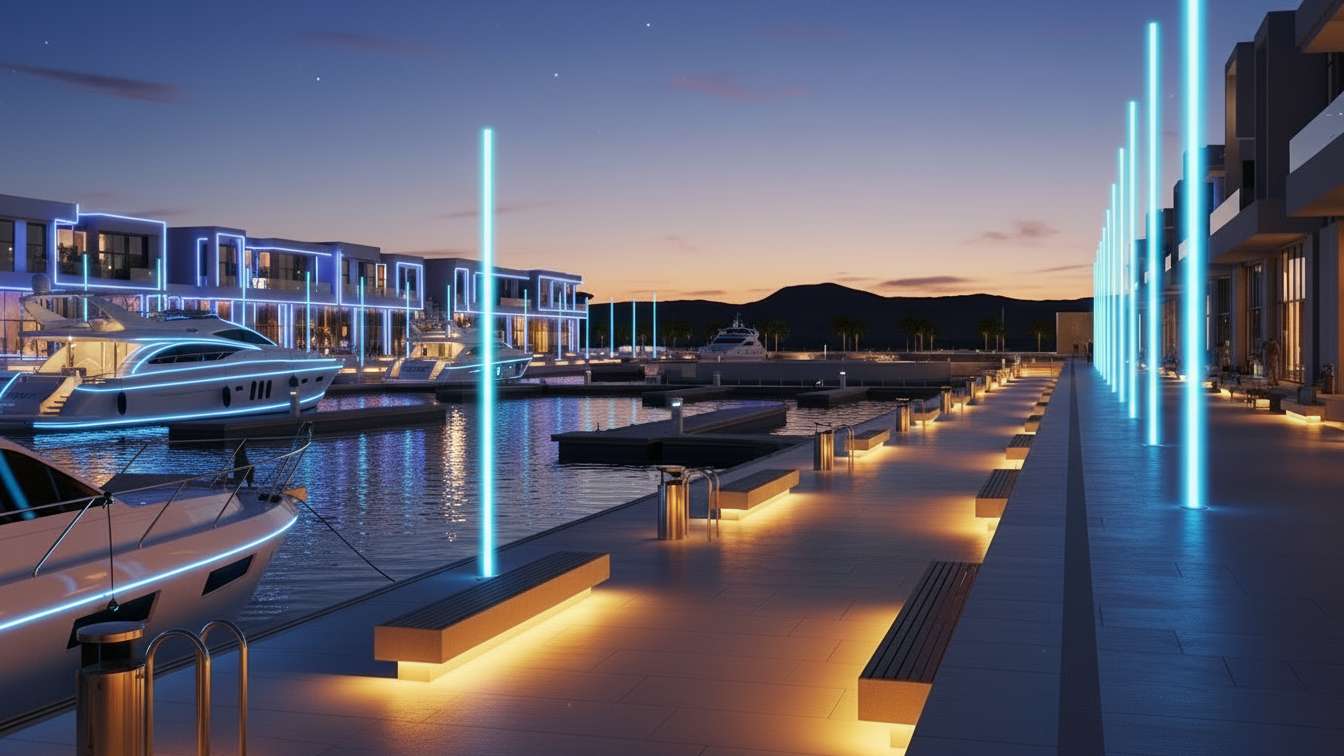
The night identity of the marina is redefined through a curated architectural lightscape that treats light as a material—minimal, poetic, precise. The marina becomes a nighttime cultural landmark, shaped by alignments, reflections and seasonal rhythms that create a contemplative experience rather than a spectacle. The installations respect the nautical environment through low‑intensity fixtures, dark‑sky compliance, nautical‑grade components and non‑invasive anchoring.
Seasonal cycles such as winter solstice alignments, spring transitions, summer regattas and autumn reflections create a living, evolving presence that resonates with the rhythms of the sea. Visitors follow a choreographed path of quiet intensities and subtle focal points, discovering the marina through light rather than noise. The night becomes an extension of the marina’s cultural architecture, expressing its identity with restraint, dignity and precision.
Curated Encounters Across the Marina
The marina becomes a living gallery through curated micro‑spaces that activate the EURAN body of work— products, texts, archival materials and collaborations. These are not retail spaces but curated encounters that blend design, craft, gastronomy, scent, textiles and narrative. Portable vitrines, micro‑galleries and carefully staged interiors appear along promenades and within selected interiors, creating a sequence of encounters that invite attention rather than demand it.
Each chapter is conceived as a self‑contained narrative with its own thematic focus, material palette and textual framing. Authenticity, materiality and ecological awareness guide the selection of objects and collaborations. The marina becomes a place where design is not consumed but experienced, where narrative shapes perception and where visitors encounter a refined cultural language that extends beyond commerce. The result is a continuous, low‑intensity yet high‑precision cultural presence woven into the daily life of the marina.
Recognition and Cultural Continuity
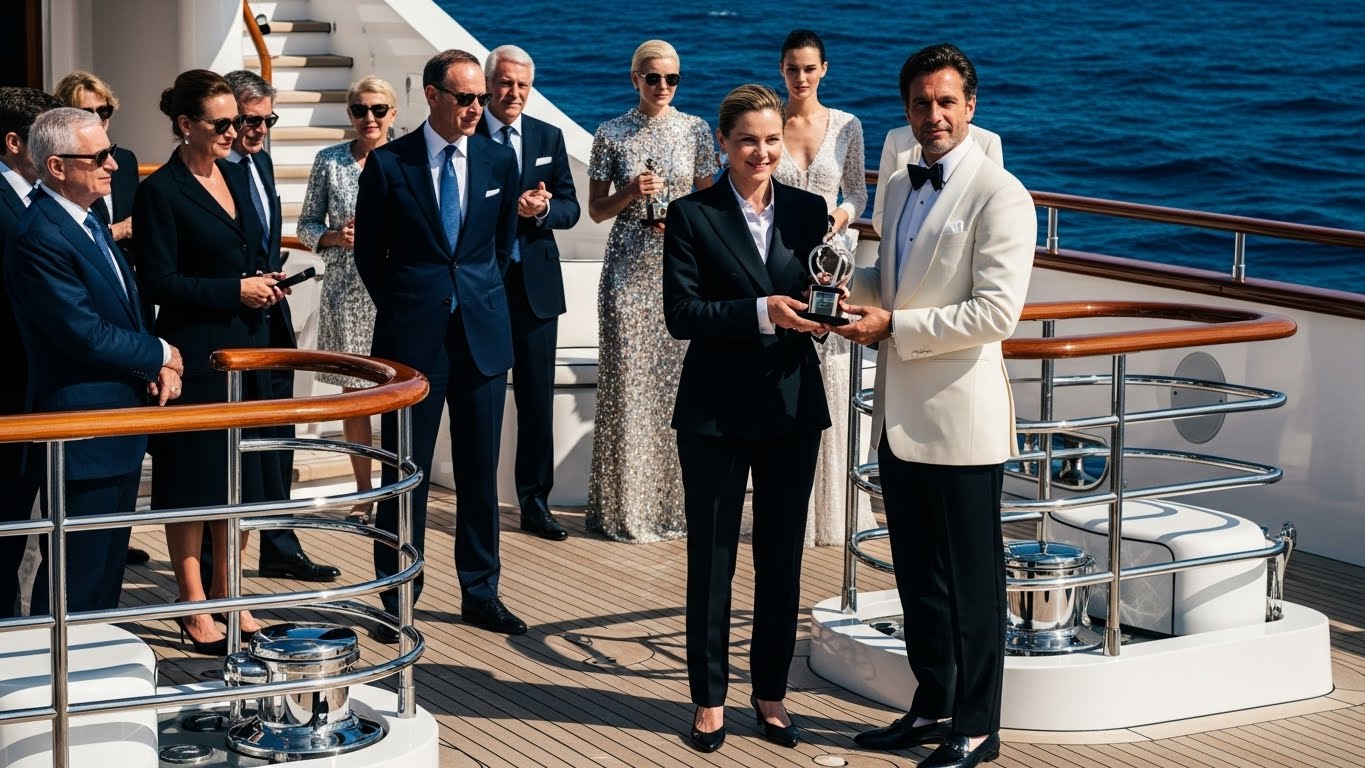
The marina becomes the home of an annual recognition dedicated to art aboard superyachts, building on the registry and extending it into a symbolic gesture of acknowledgment. Excellence in curatorial coherence, installation quality, conservation and architectural integration is discreetly identified and celebrated. Evaluation processes are conducted with respect for privacy and technical constraints, involving curators, conservators and designers who understand the specificities of art at sea.
Satellite presentations in international hubs, using photographs, drawings and narratives rather than original works, allow the marina’s cultural presence to travel without compromising security or discretion. Owners receive private feedback, narrative development and conservation guidance. The recognition becomes a cultural anchor for the marina, generating international visibility, sponsor engagement and long‑term partnerships. It reinforces the marina’s identity as a cultural institution and strengthens its position within the global maritime community.
Cultural Partnerships and Luxury Activations
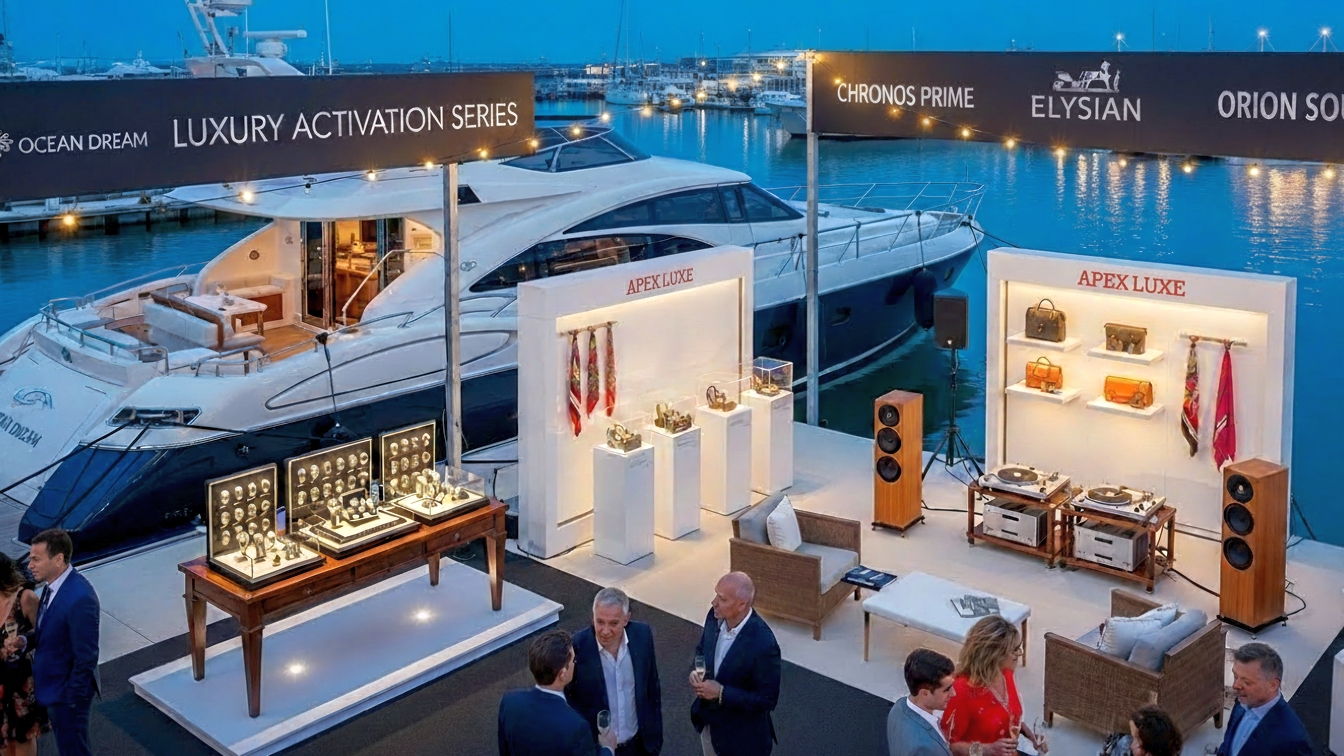
The marina becomes a stage for refined cultural expression through a yearly cycle of curated encounters with luxury brands. Winter salons, spring ateliers, summer night gatherings and autumn symposia create a rhythm of presence that prioritizes quality over quantity. These encounters blend performance, gastronomy, design and dialogue into a coherent cultural experience that reflects the marina’s identity rather than overshadowing it.
The audience includes UHNW owners and their families, architects and designers, museum patrons, collectors and selected media. Luxury is treated as culture: thoughtful, measured and grounded in curatorial intelligence. Brands are integrated as co‑authors rather than sponsors in the superficial sense. The marina becomes a meeting point where long‑term relationships are formed, where collaborations are tested and where cultural and commercial interests are aligned under a shared standard of refinement.
The Superyacht Owners’ Cultural Circle
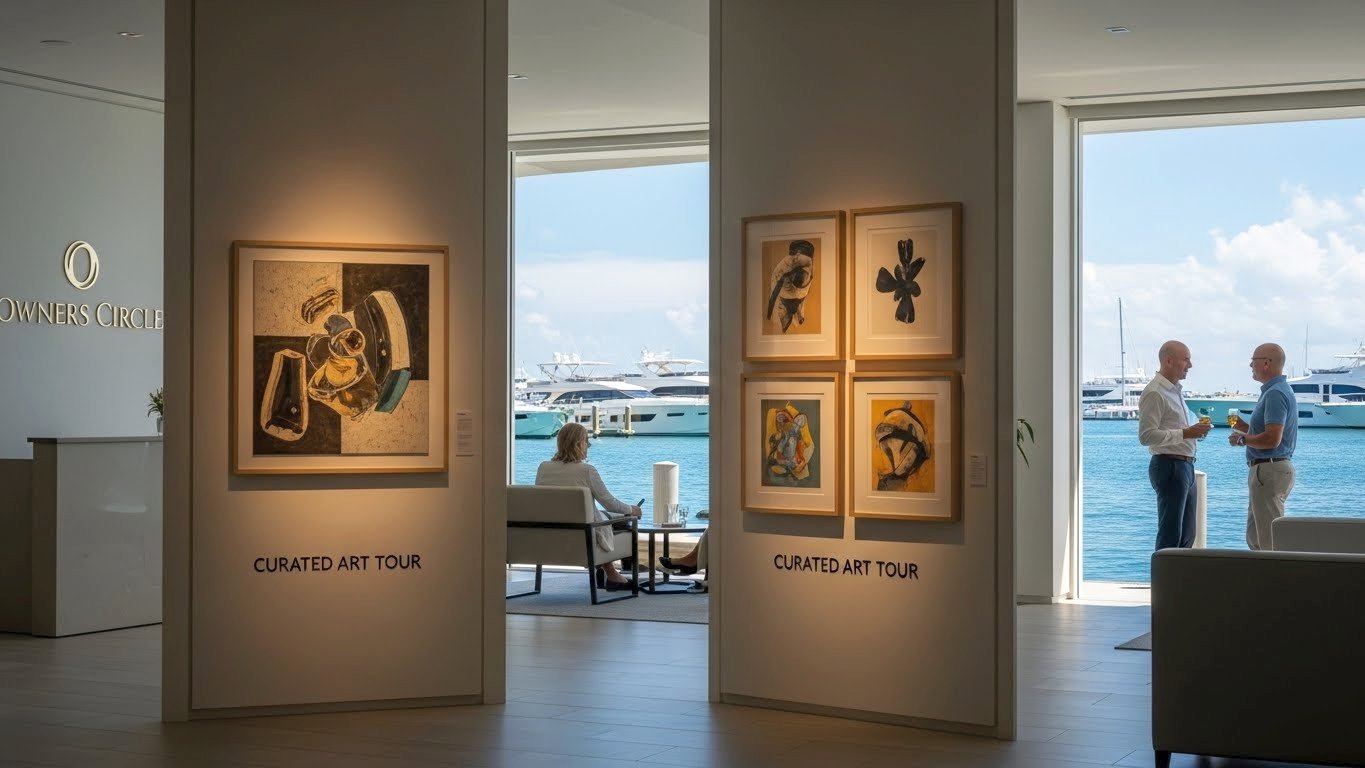
The marina becomes the home of a discreet cultural community dedicated to superyacht owners who seek depth, continuity and meaningful engagement. The Owners’ Cultural Circle offers a refined environment where members encounter curated previews, private artistic dialogues and advisory sessions that respect the privacy and discretion inherent to the maritime world. It is conceived as a long‑term cultural relationship rather than a membership product, aligning the marina with the expectations of owners who value intimacy, precision and intellectual clarity.
Members are invited to private viewings connected to the cultural registry of art at sea, behind‑the‑scenes conversations with artists, designers and conservators, and discreet pathways for commissioning works that align with the architectural and environmental constraints of life aboard. The Circle operates with minimal visibility, guided by strict privacy protocols and personalised communication. Its rhythm follows the marina’s cultural calendar, with salons aligned to seasonal activations, night‑time visits during the architectural light cycles and bespoke encounters during key cultural moments.
The Owners’ Cultural Circle strengthens loyalty, deepens the marina’s cultural identity and creates a community of patrons who recognise the marina not only as a harbour but as a site of cultural intelligence. It becomes a stabilising force within the marina’s ecosystem, generating long‑term engagement, supporting sponsorship pathways and anchoring the marina’s position within the global network of cultural maritime destinations.
Governance and Institutional Alignment
Governance is central to Prototype 226. The model includes cultural governance, sponsorship frameworks, privacy protocols, multi‑layered advisory, operational integration and international alignment. This ensures that the marina becomes a trusted cultural institution rather than a venue for ad‑hoc events. Clear governance attracts sponsors, reassures owners and establishes the marina as a credible partner for global collaborations.
The marina’s cultural programs are framed by transparent agreements, ethical standards and long‑term planning. Privacy and discretion are protected through explicit protocols. Partnerships with institutions, festivals and cultural networks are pursued with a view to continuity rather than spectacle. In this way, the marina’s identity remains coherent, protected and institutionally aligned, capable of sustaining complex cultural initiatives over time.
A Modular and Scalable Transformation
Prototype 226 is deployable in existing marinas, new marina developments, waterfront districts, luxury hospitality complexes and mixed‑use coastal projects. Activation can begin with a single program, a full cultural identity or a multi‑year transformation plan. The model is modular, scalable and adaptable to different geographies and operational realities, allowing each marina to adopt the prototype at its own pace and depth.
Implementation is precise and measured. Pilot zones, phased roll‑outs and carefully sequenced programs allow the marina to test, refine and expand its cultural architecture without disrupting its core operations. Over time, the prototype becomes fully integrated into the marina’s daily life, shaping not only how it looks but how it thinks, decides and collaborates. The result is a transformation that is both ambitious and operationally grounded.
A Cultural Landmark for the Global Maritime World
A marina adopting Prototype 226 becomes a cultural landmark, a strategic partner for luxury brands, a trusted environment for superyacht owners, a destination rather than a waypoint and a node in the global Art Marinas Network. It gains visibility, sponsorships, cultural authority, international partnerships and a long‑term identity that no competitor can replicate.
It becomes a place where culture, design and maritime excellence converge into a coherent, elevated and globally relevant experience. The marina is perceived not only as a safe harbor but as a site of cultural intelligence, aesthetic precision and strategic foresight. In a world where destinations compete for attention and loyalty, Prototype 226 gives the marina a distinct, enduring and institutionally credible position.
Begin the Transformation
EURAN offers a confidential strategic briefing presenting the Prototype 226 model, the Art Marinas Network, the cultural identity framework, activation pathways, sponsorship architecture and international alignment. This briefing is private, institution‑ready and tailored to the needs of marina operators, developers and strategic partners seeking to redefine their waterfront presence.
It is the first step toward creating a marina that is not only functional but culturally significant, aesthetically coherent and globally resonant. From this initial conversation, a precise roadmap can be drawn, aligning ambition, resources and timelines into a clear, actionable cultural architecture for the marina.