
160m+ Mega Yacht Prototype
Project 226 establishes the mega yacht as a cultural and architectural institution. The vessel operates through a Sequential Art Protocol integrating 172 artworks across seven decks, forming a continuous narrative that governs circulation, ceremony, residence, and governance.
Two complete interior environments — Classical Register and Monochrome Register — provide parallel experiential readings of identical spatial geometry. These are not decorative variations but institutional modes of operation embedded into the vessel’s architectural identity.
The architectural system of Project 226 is structured as a sovereign spatial hierarchy. Each module defines a layer of governance, circulation, or cultural function, ensuring that the vessel operates as a unified institutional environment rather than a decorative object.
Seven decks arranged from ceremonial reception to private residence, wellness, and command. Exterior volumes and interior sequences form a continuous architectural field, calibrated for long axial views, controlled thresholds, and institutional clarity.
Classical Register: tactile, luminous, grounded in European hospitality lineage.
Monochrome Register: graphic, cinematic, architecturally distilled.
Both registers operate on identical spatial geometry, enabling two parallel experiential
readings of the same architecture without compromising structural coherence.
172 artworks distributed across circulation spines, sculpture corridors, salons, suites,
and deck transitions. The matrix includes:
– 40 Sculptural Installations
– 96 Works on Paper & Canvas
– 12 Architectural Integrations
– 24 Suite Embedded Works
Art is embedded into the architecture as a structural component, not applied as decoration.
A governance protocol defines acquisition, conservation, rotation, and valuation standards. A curatorial advisory board structure can be activated for long term cultural positioning, ensuring the vessel operates within an international institutional ecosystem.
Project 226 is positioned within the upper stratum of global large yacht architecture. Its technical envelope is defined to support long range cultural operations, institutional hosting, and dual environment interior systems without compromising structural integrity or navigational performance.
Length Overall: 160m+
Estimated Gross Tonnage: 12,000–14,000 GT (concept range)
Decks: 7
Integrated Artworks: 172 (Sequential Art Protocol)
Operational Profile: Transoceanic, long range global cruising
Classification: To be defined with partnering shipyard and regulatory authorities
All technical parameters remain adaptable to shipyard collaboration, ensuring alignment with engineering partners, classification societies, and the vessel’s long term cultural governance strategy.
The General Arrangement of Project 226 is structured as a seven deck institutional matrix. Each deck carries a defined architectural mandate—ceremonial, social, residential, wellness, operational—ensuring that circulation, sightlines, and programmatic density remain coherent across both interior registers.


The exterior architecture establishes the vessel’s institutional identity. Long horizontal volumes, controlled curvature, and calibrated apertures create a continuous relationship between sea, deck, and interior program. The exterior envelope is treated as a cultural façade rather than a decorative shell.
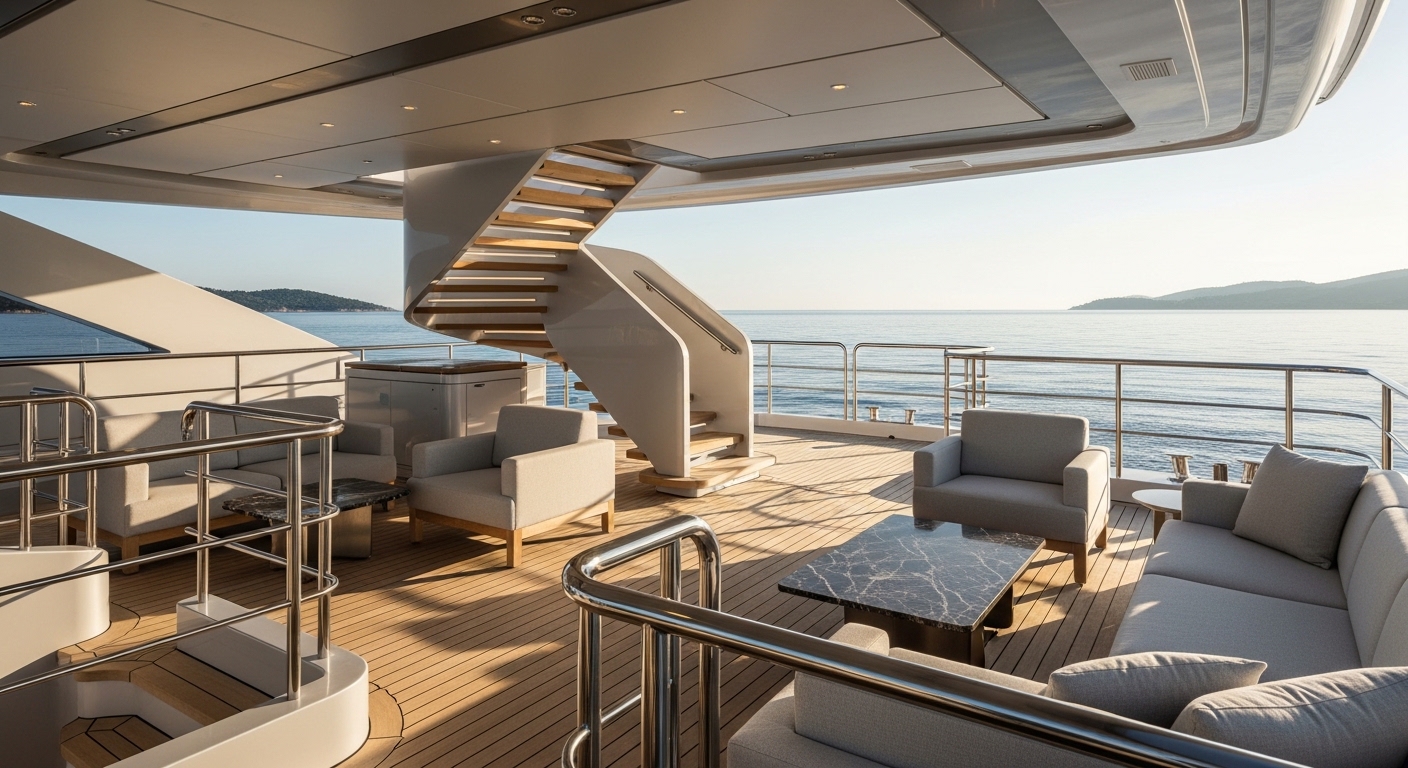
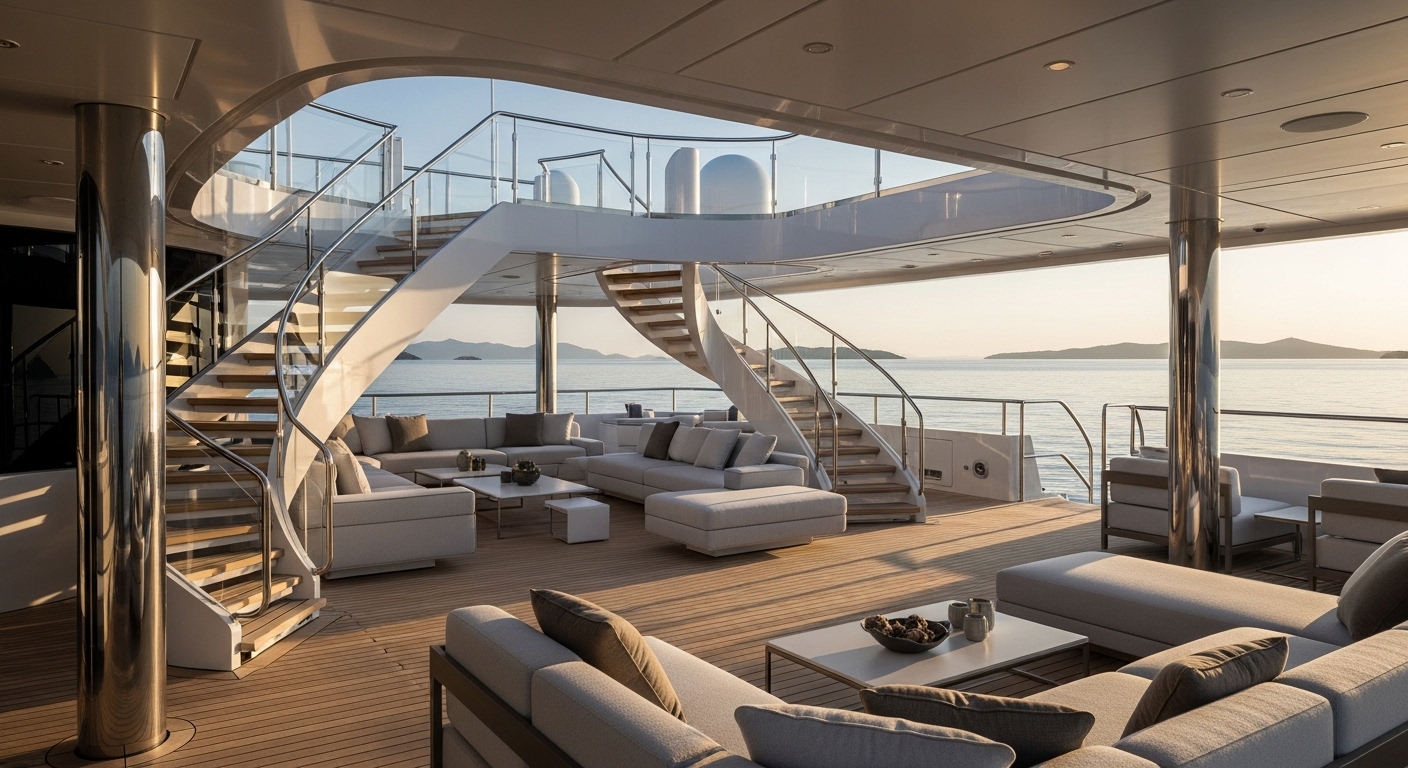
The ceremonial and social architecture of Project 226 is structured as a dual environment program. Each register—Classical and Monochrome—provides a distinct experiential reading of identical spatial geometry, enabling the vessel to operate across formal, diplomatic, and private contexts without altering its architectural identity.
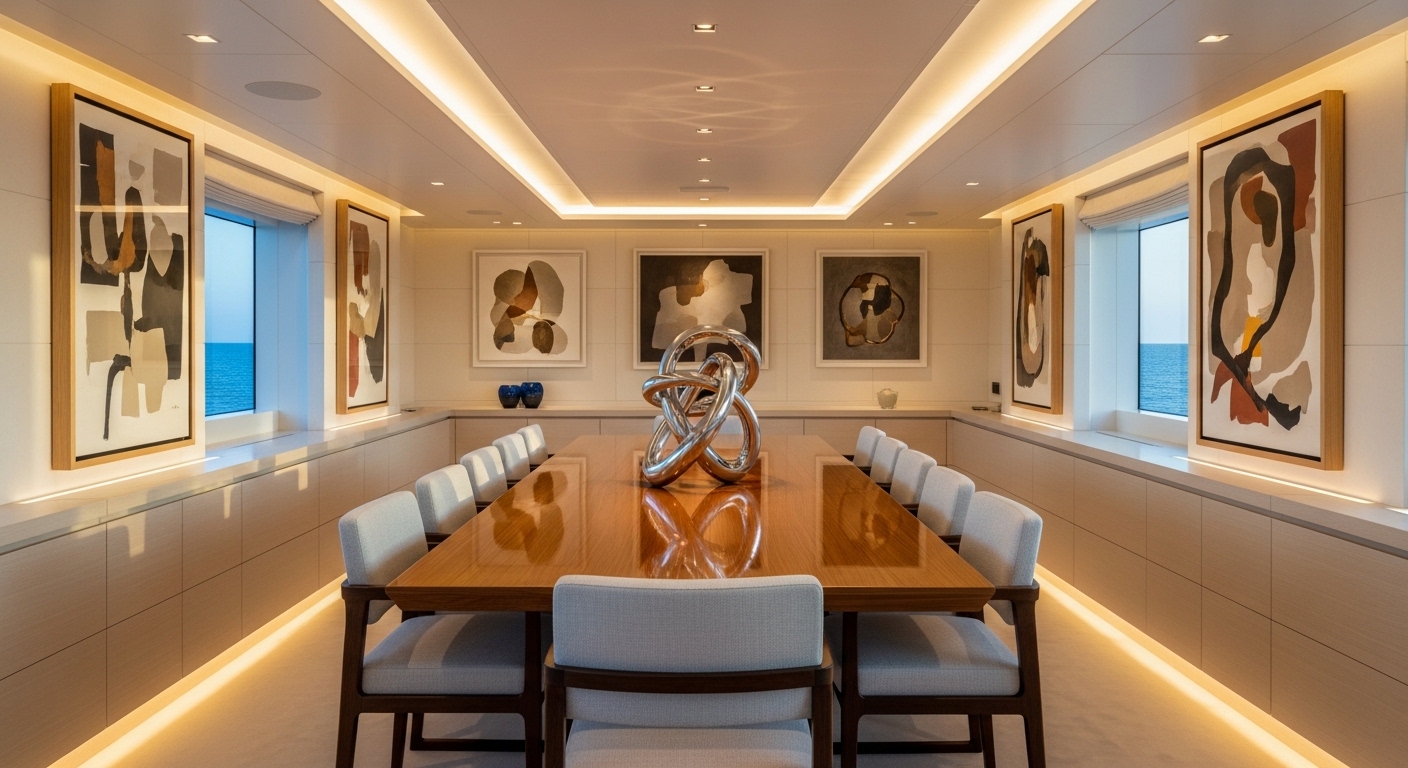
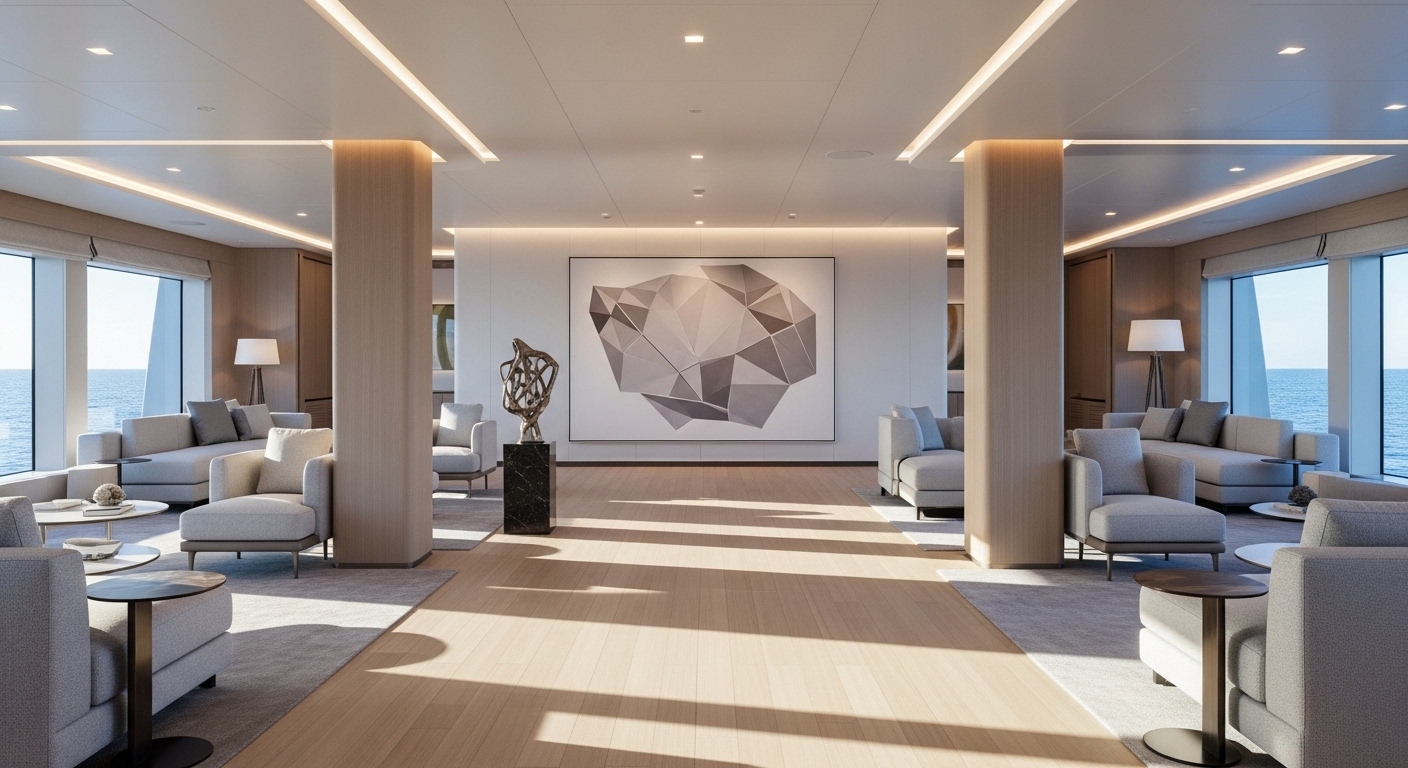
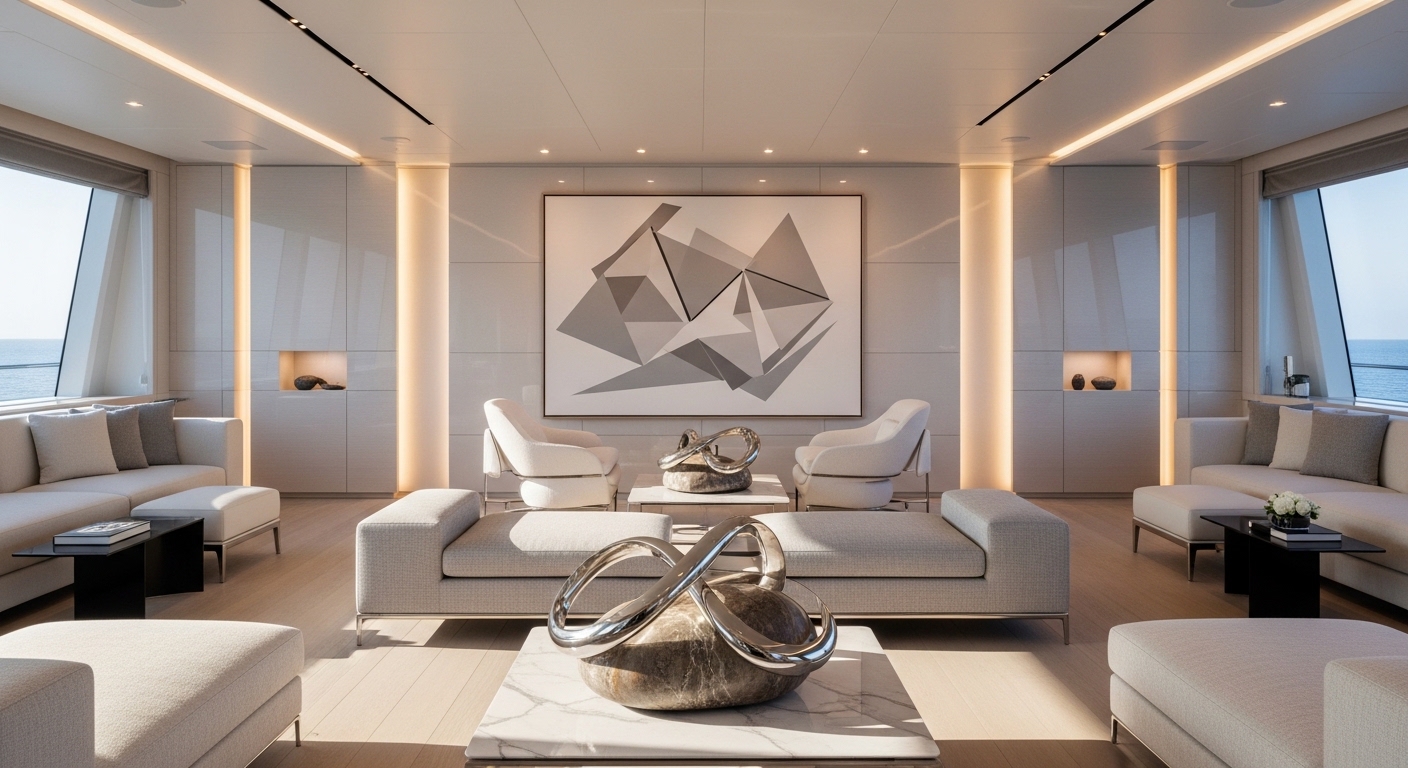
The Classical Register establishes a luminous, tactile environment grounded in European hospitality lineage. Dining rooms, lounges, and social salons are calibrated for ceremony, reception, and extended conversation, with warm materiality and controlled lighting.
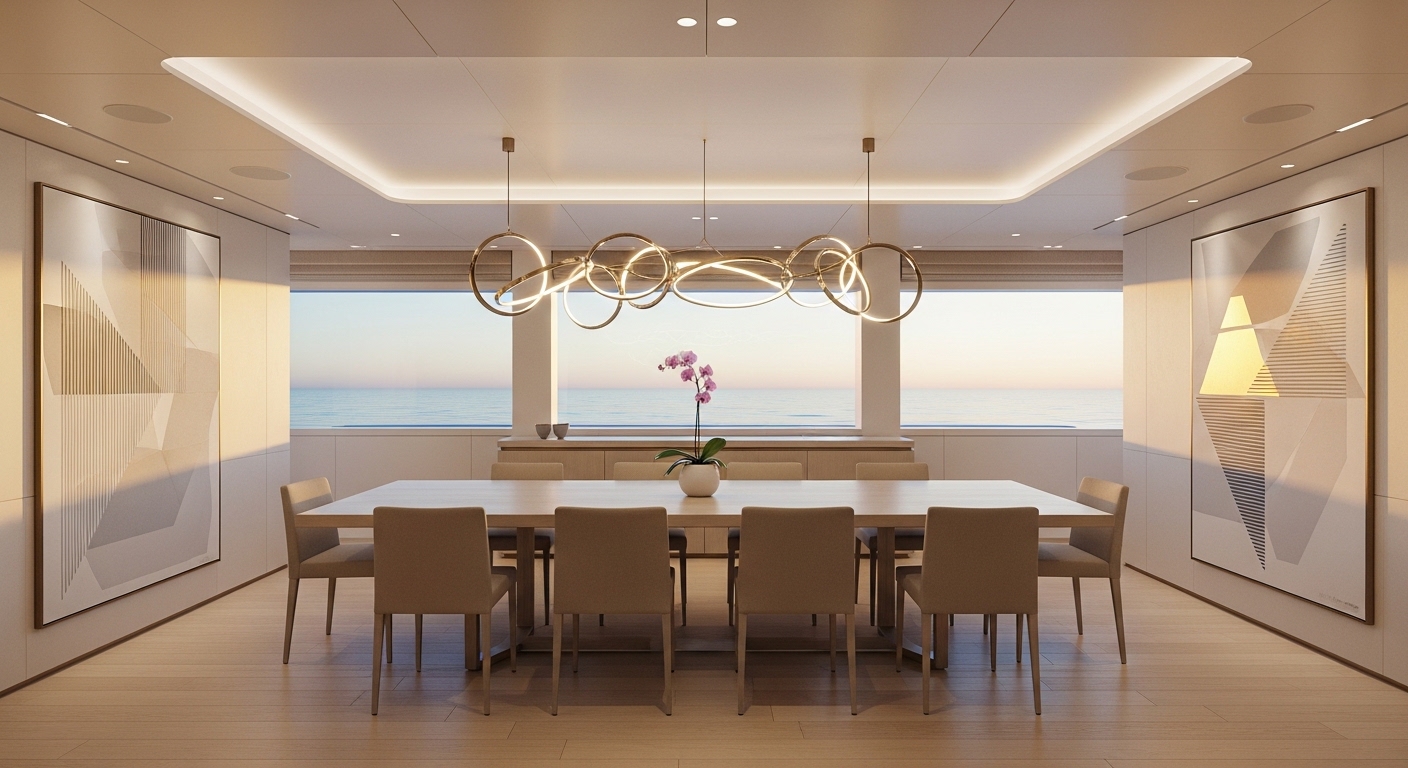
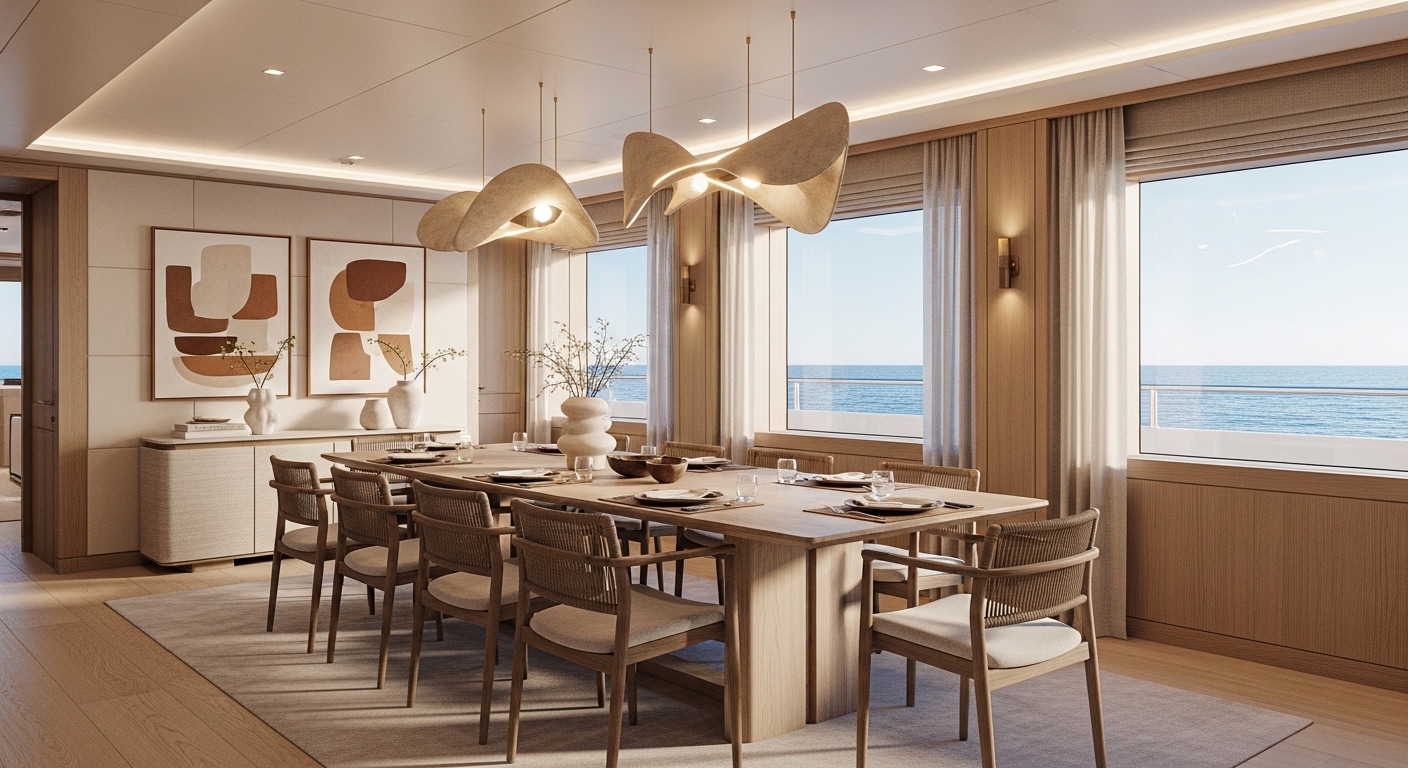
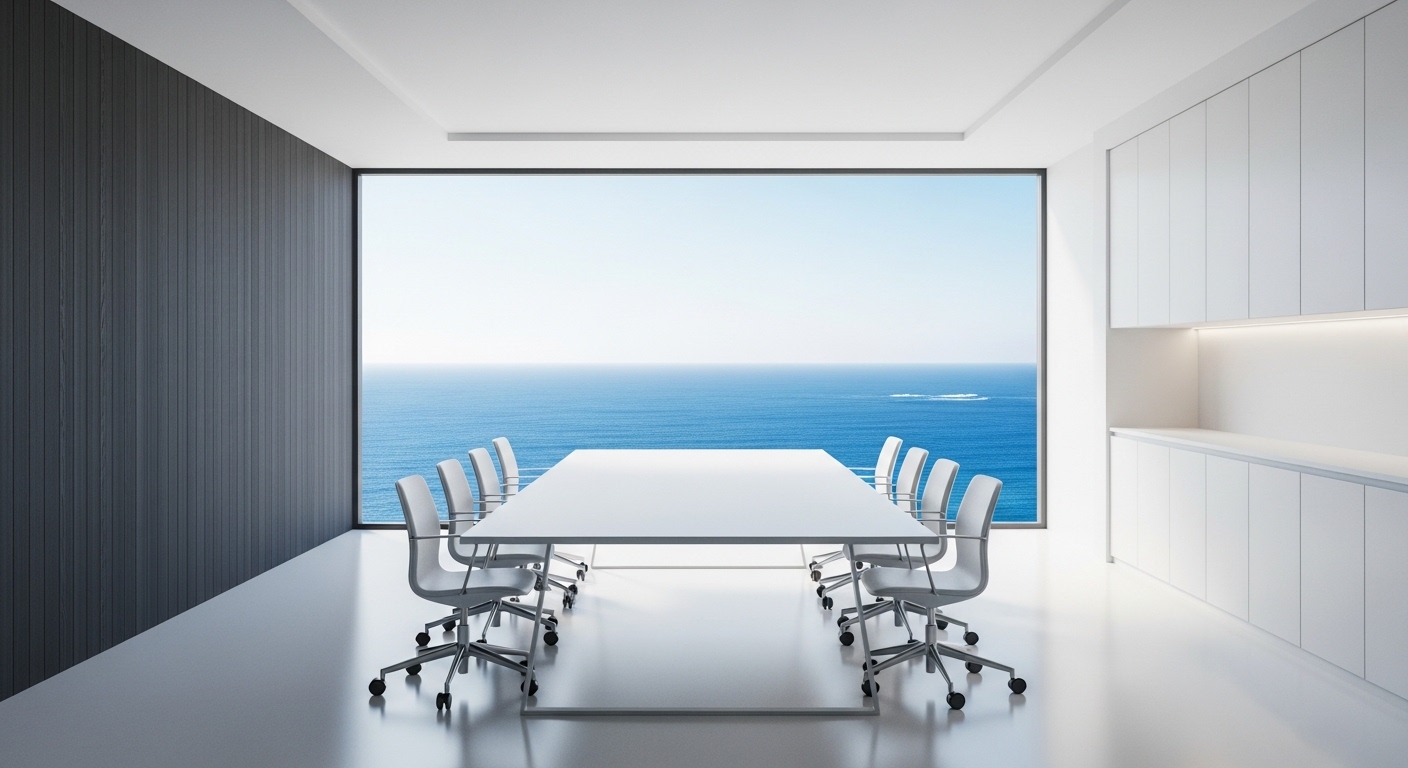
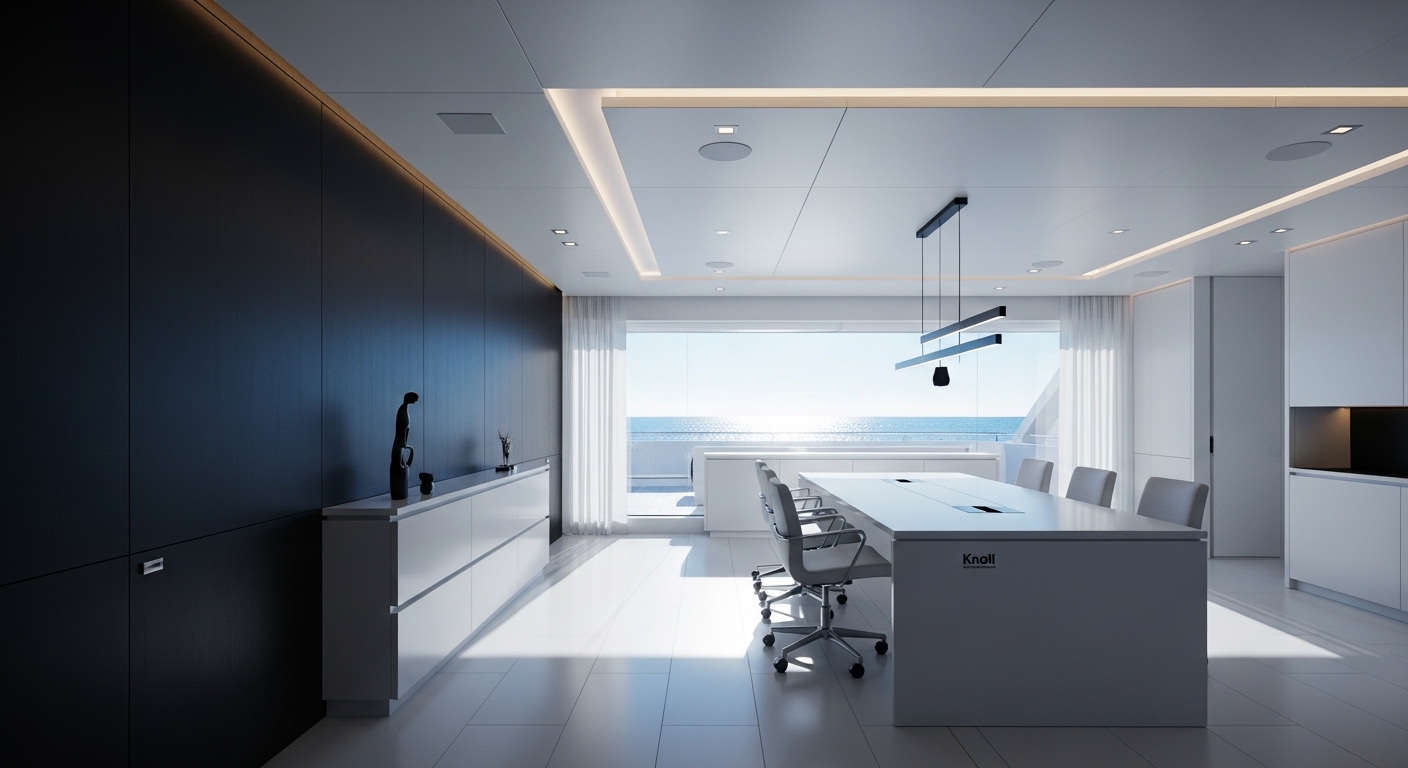
The Monochrome Register introduces a graphic, cinematic environment defined by clarity, contrast, and architectural precision. This register supports executive meetings, private negotiations, contemporary dining, and high level cultural hosting.
.jpg)
.jpg)
.jpg)
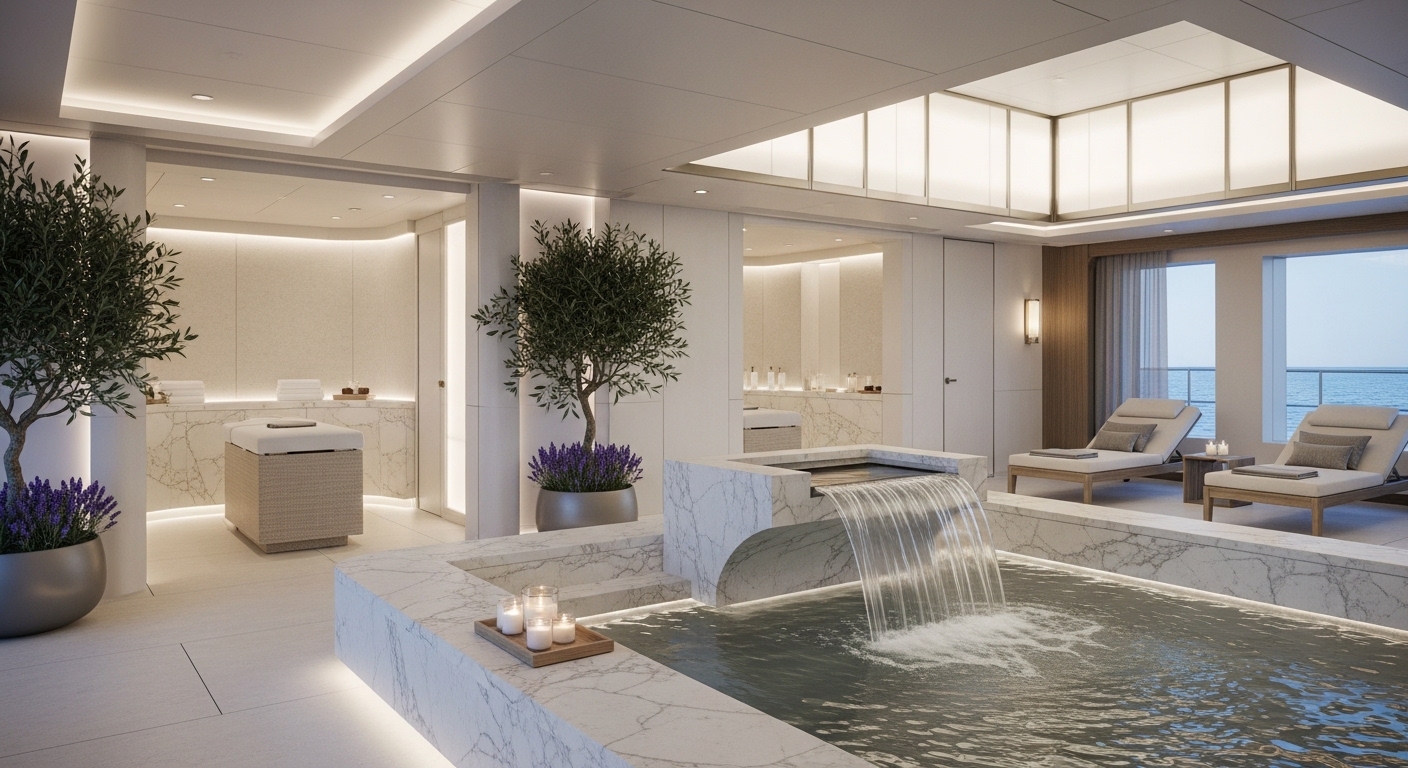
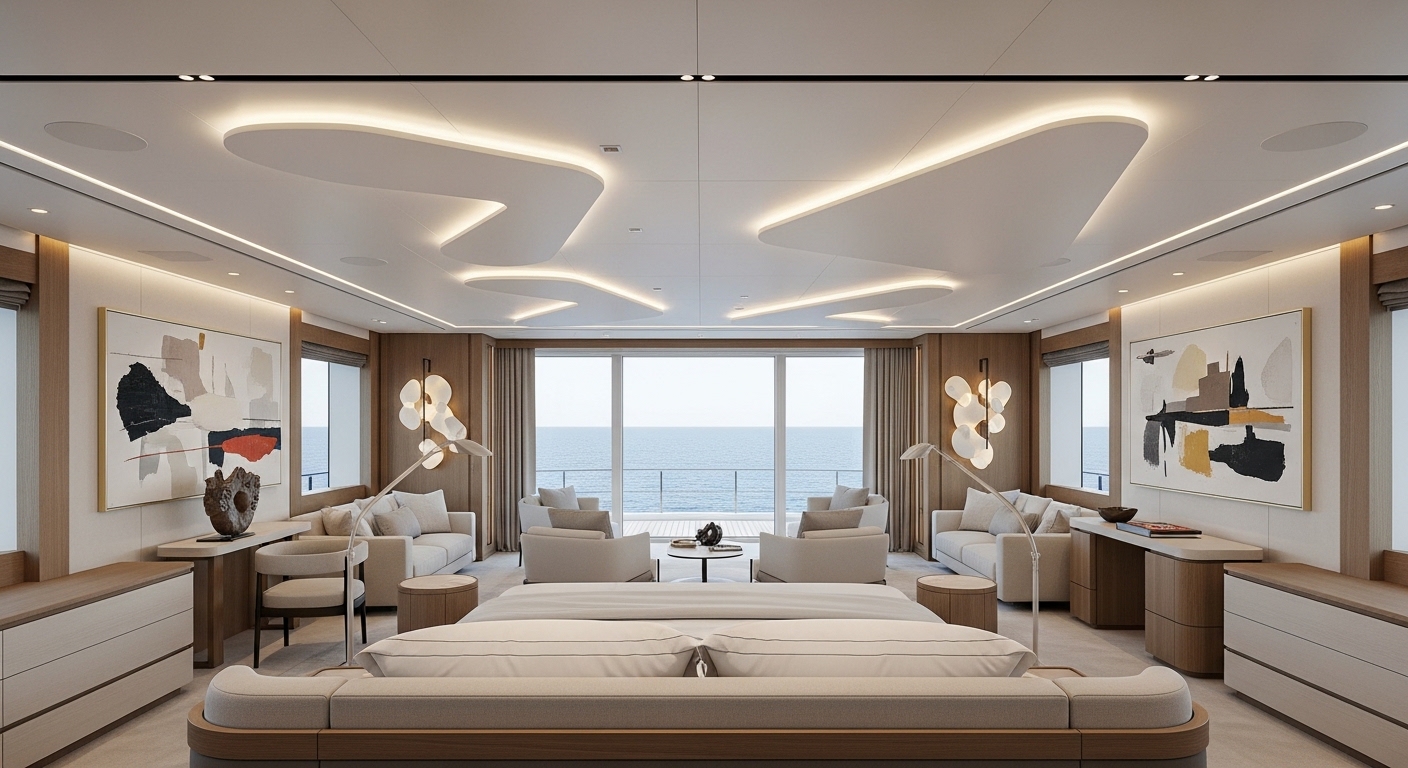
The residential architecture of Project 226 is structured as a dual environment program. Suites, private lounges, and wellness spaces are designed as sovereign interior territories, enabling two parallel experiential registers—Classical and Monochrome—within identical spatial geometry. This ensures continuity of identity across all private domains.
The Classical Register establishes a warm, tactile environment for long stay residence.
Materiality, lighting, and spatial proportion are calibrated for comfort, privacy,
and extended habitation, reflecting a European lineage of residential hospitality.
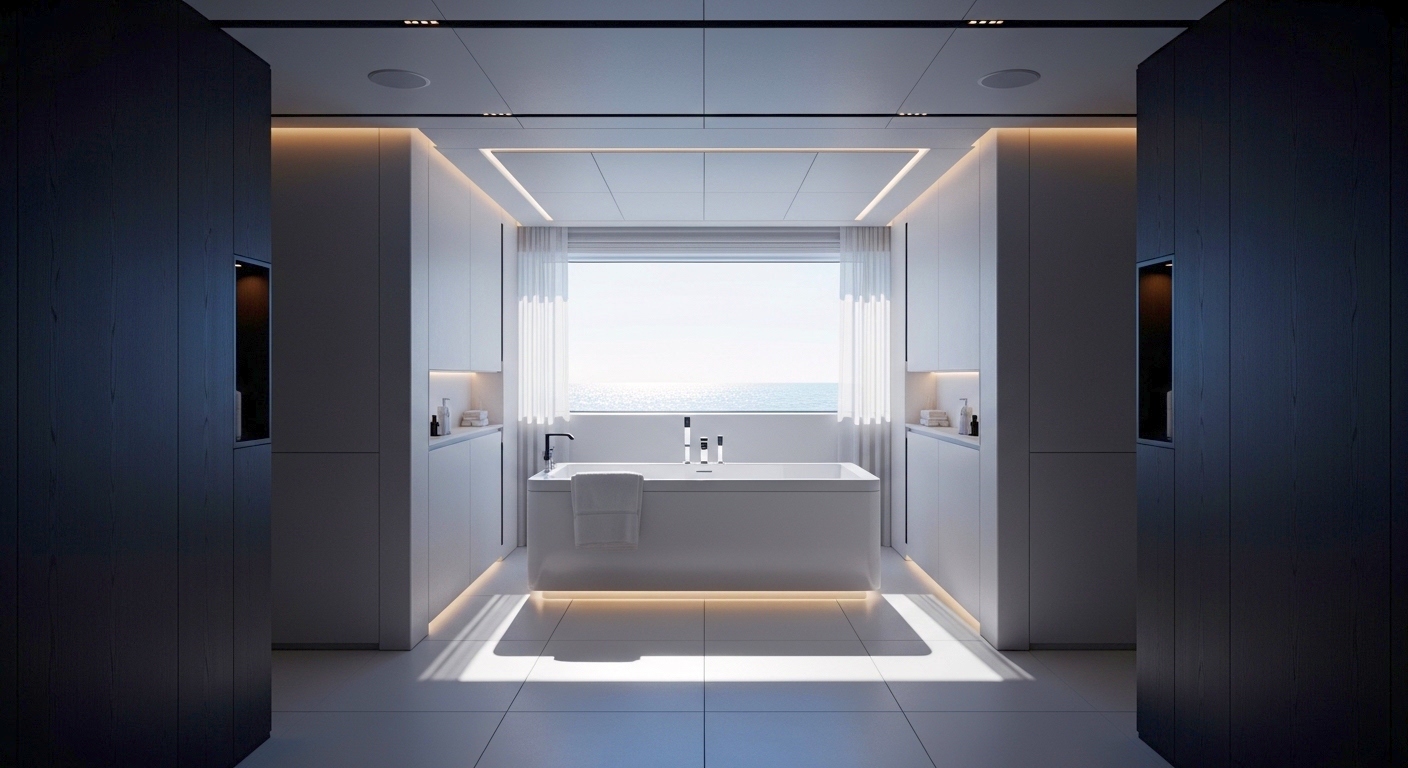
The Monochrome Register introduces a distilled, graphic environment for contemporary living. High contrast spatial composition, controlled lighting, and architectural clarity define a residential experience aligned with modern cultural and executive lifestyles.
.jpg)
.jpg)
Circulation and transitional zones form the institutional spine of Project 226. These spaces are not treated as secondary corridors but as curated architectural environments where sculpture, light, and proportion establish continuity between ceremonial, residential, and operational domains. Both interior registers—Classical and Monochrome—operate across identical spatial geometry, ensuring a unified narrative throughout the vessel.
The Classical Register introduces warm materiality and sculptural presence. Transitional spaces become luminous galleries where artworks anchor movement and provide rhythm across long circulation axes.
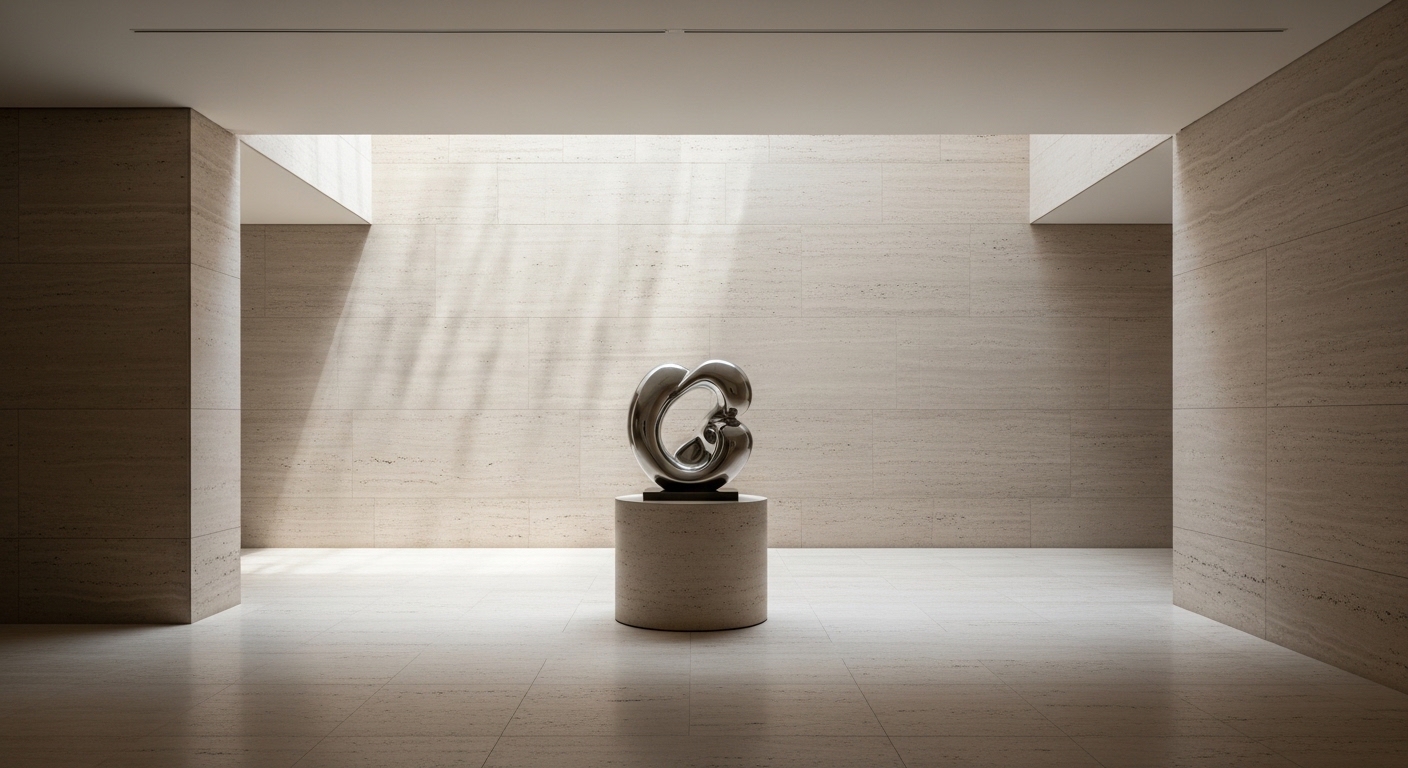
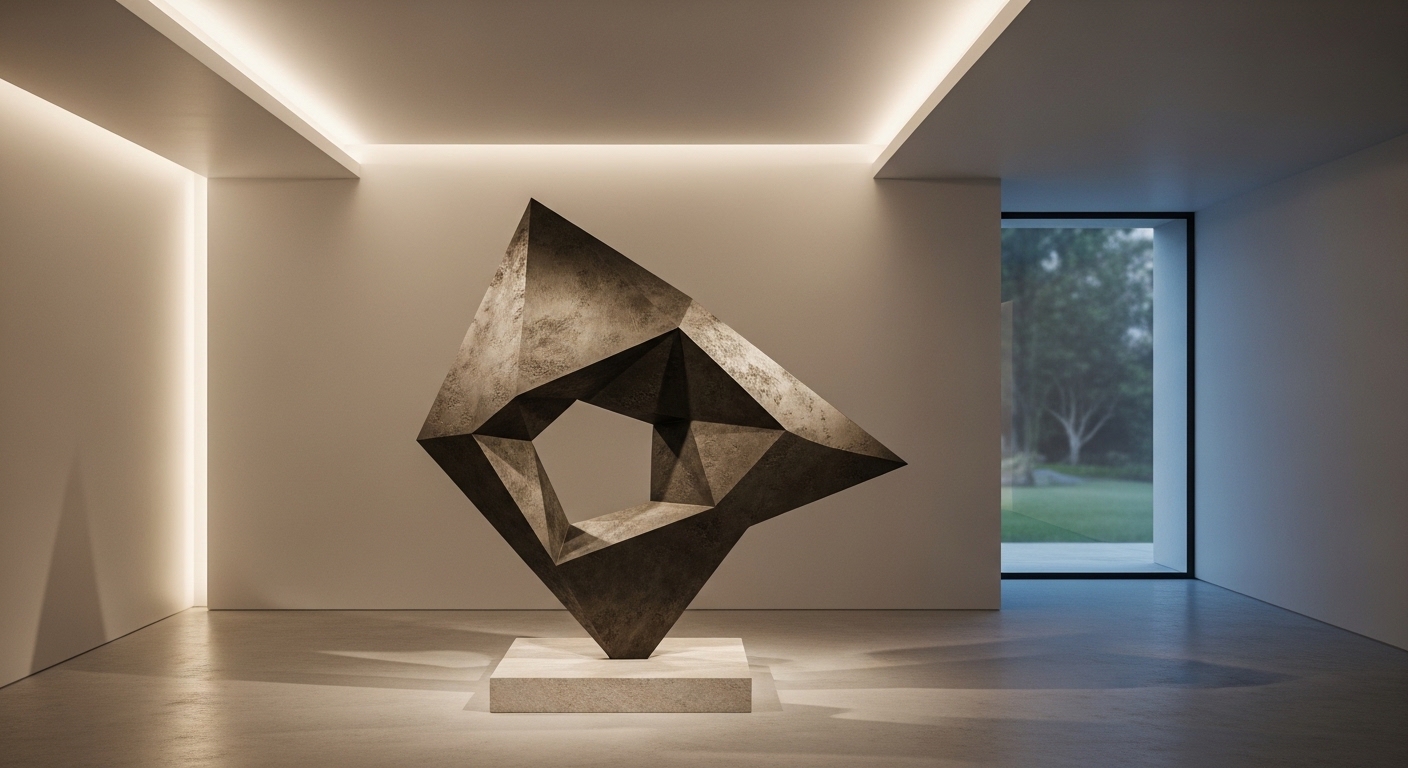
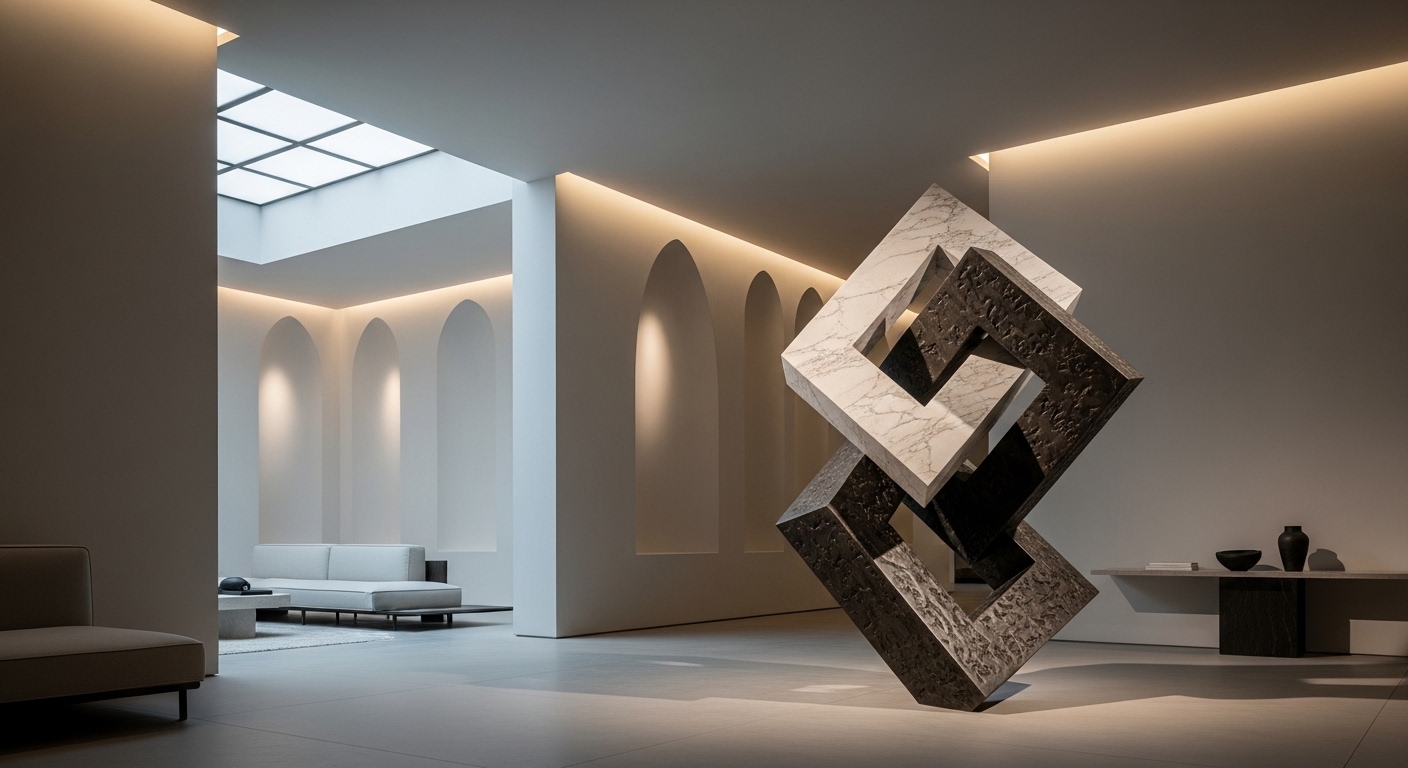
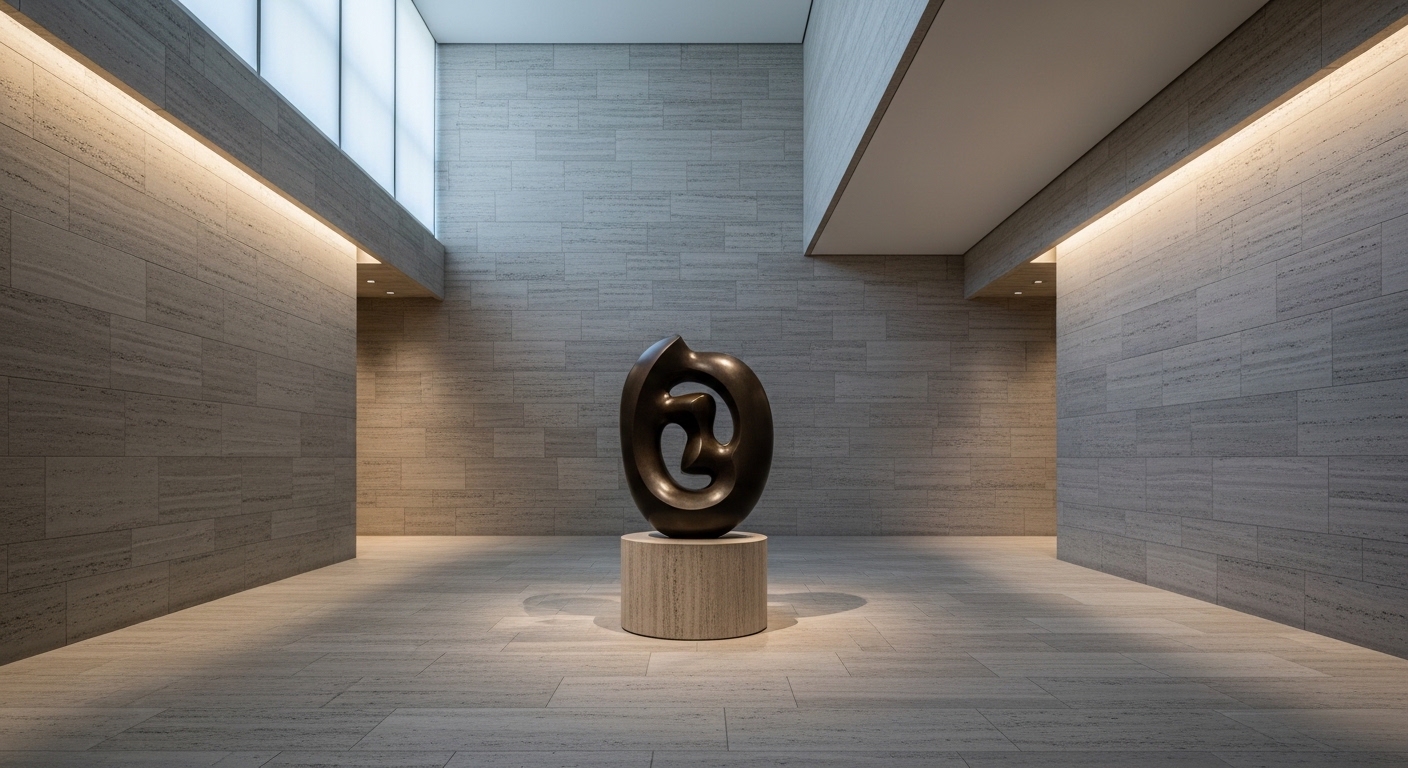
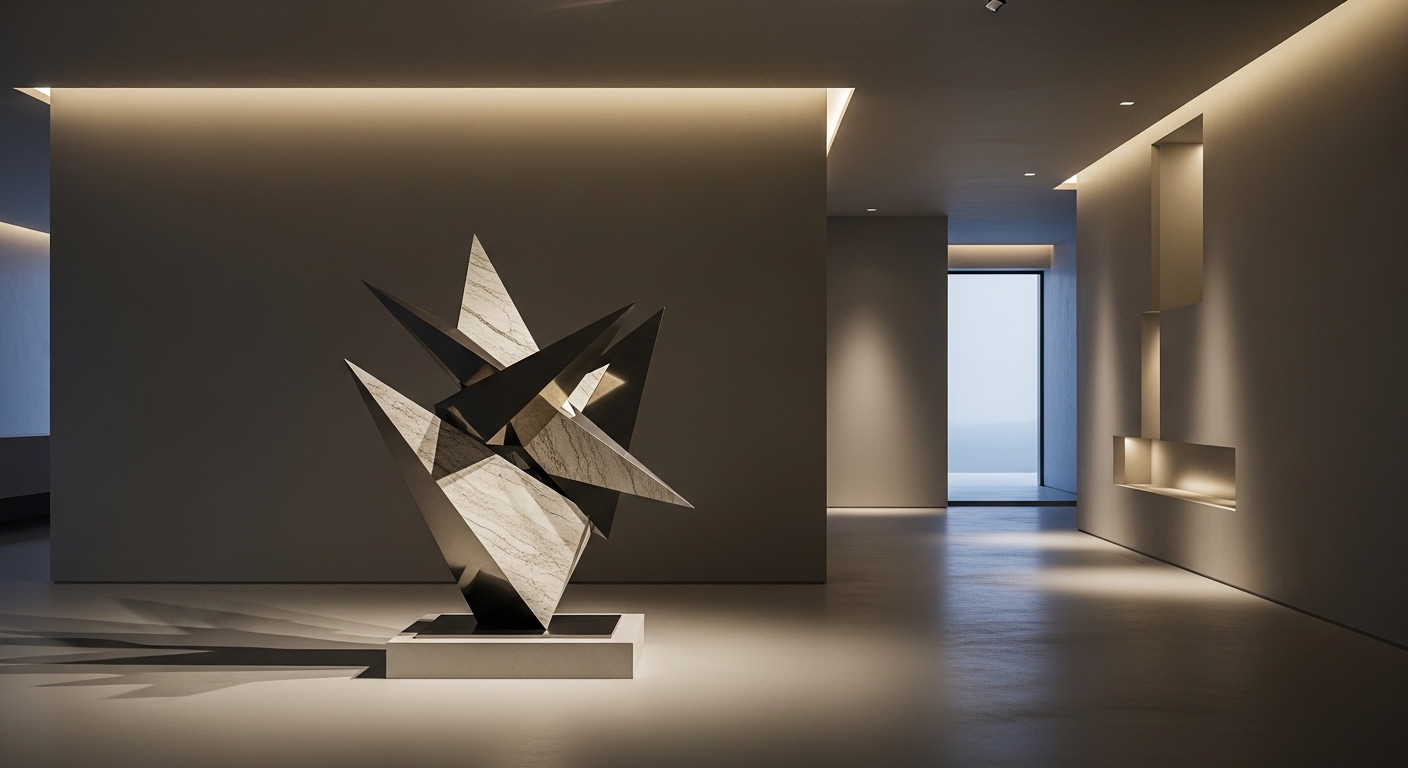
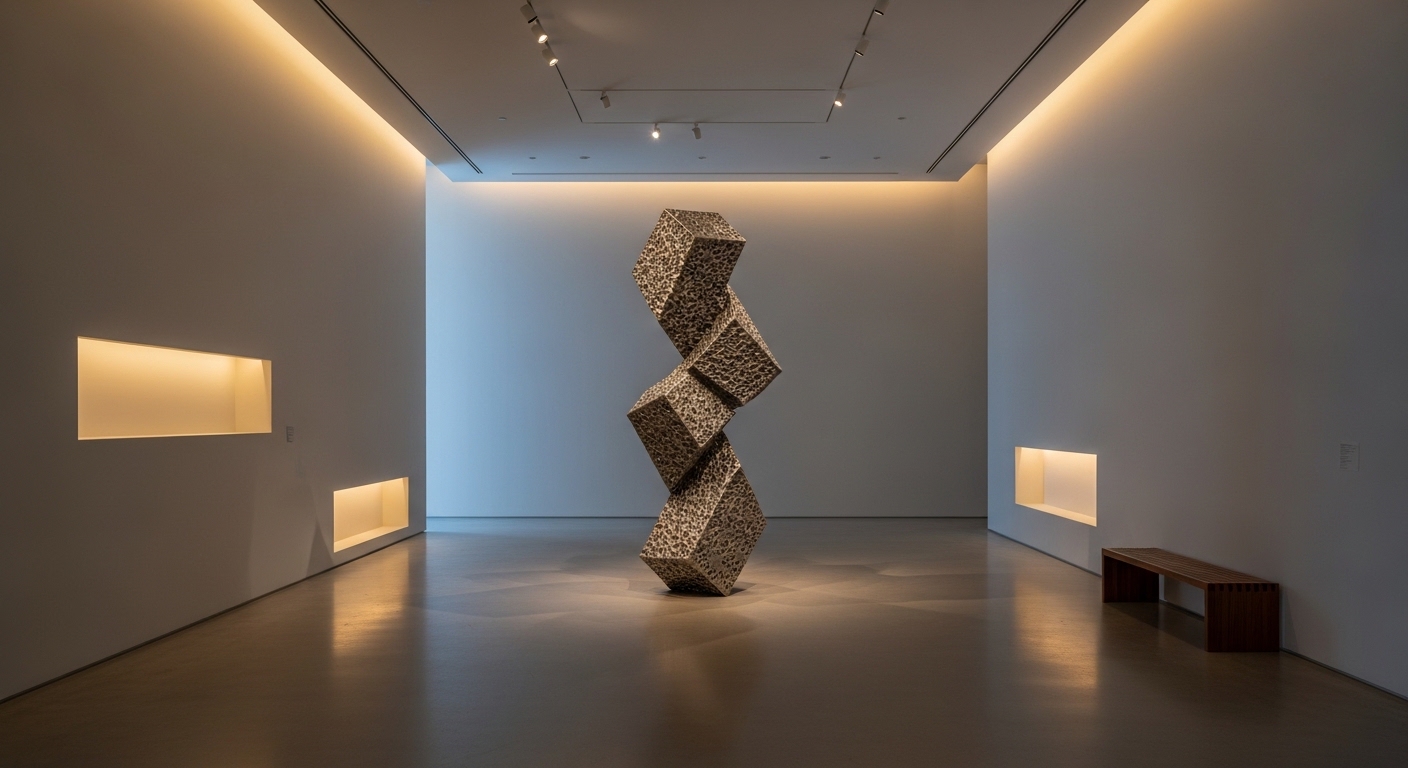
The Monochrome Register reframes circulation as a graphic, architectural sequence. High contrast compositions, controlled lighting, and sculptural silhouettes create a cinematic progression through the vessel’s institutional core.
.jpg)
.jpg)
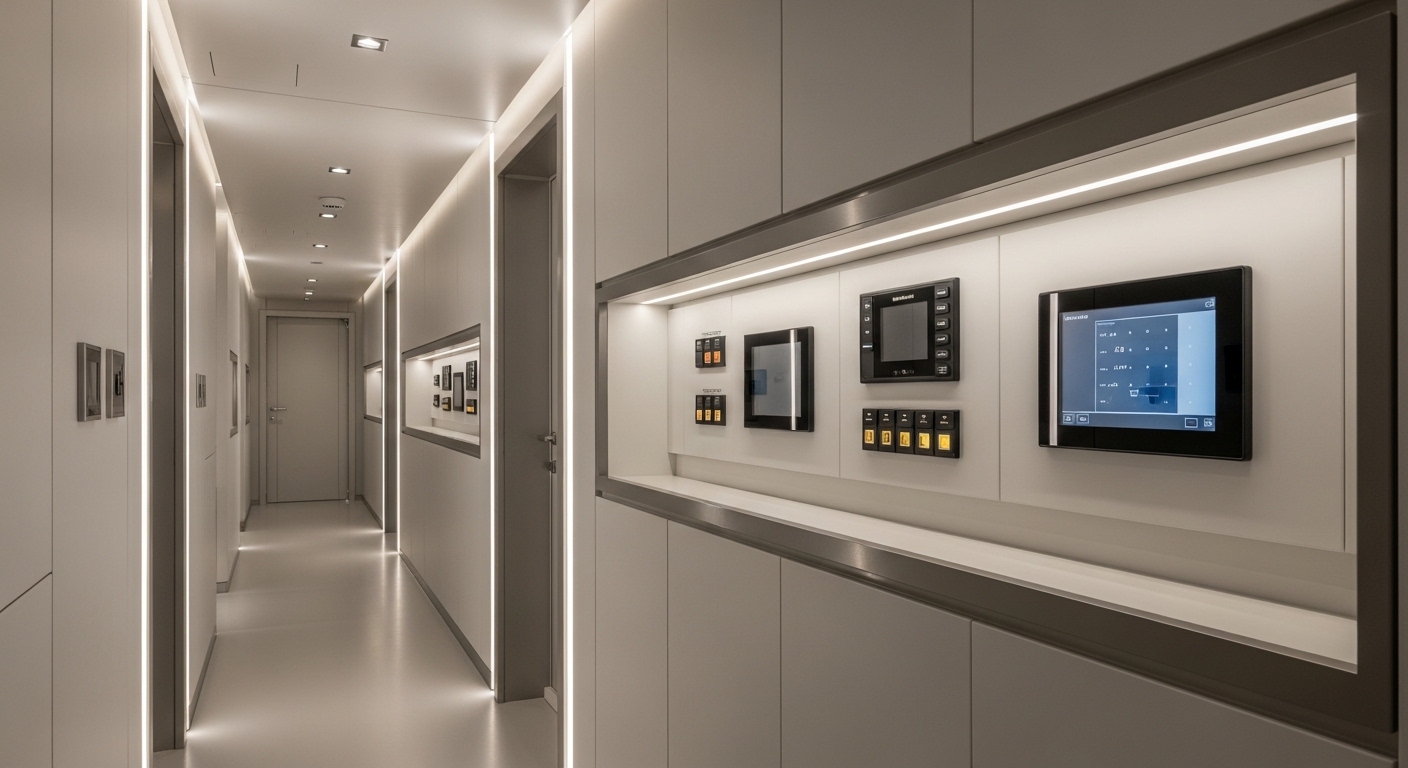
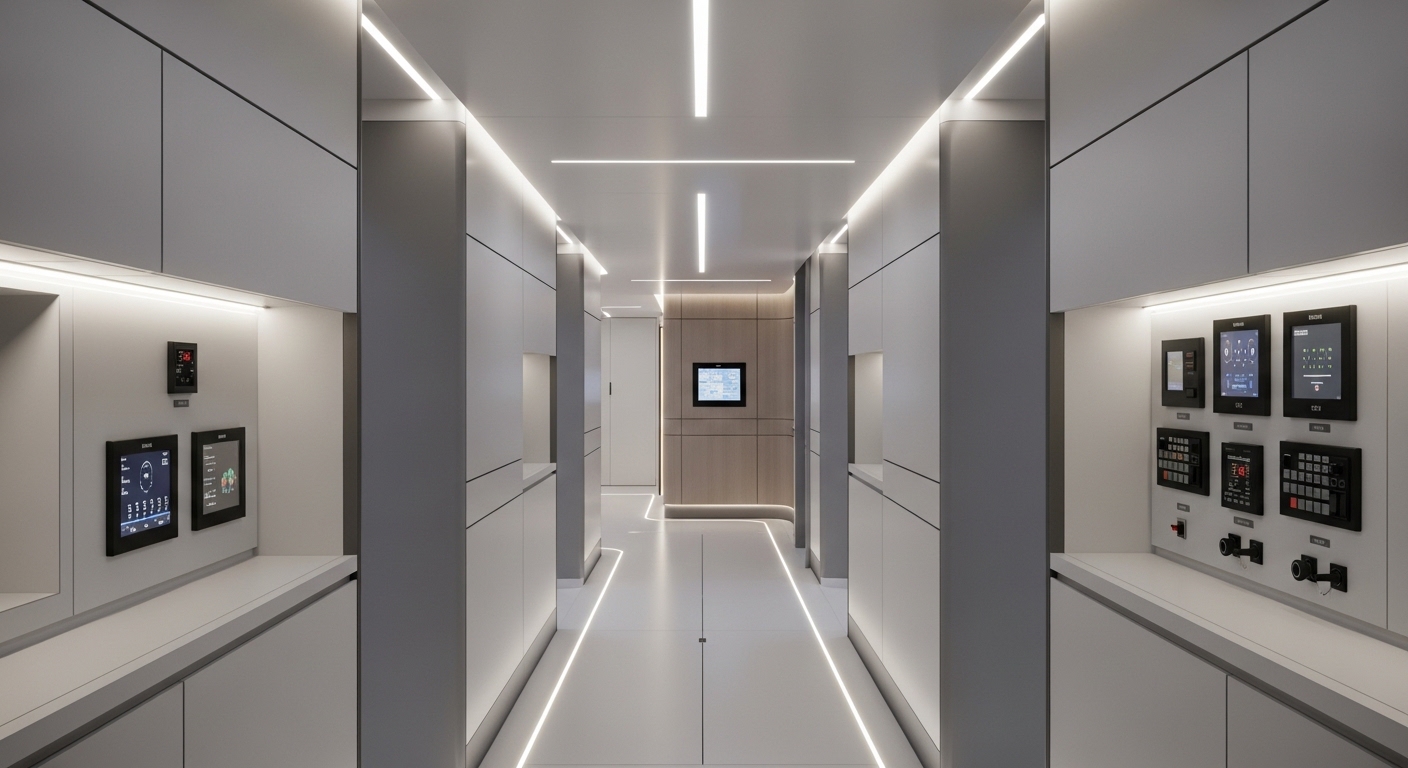
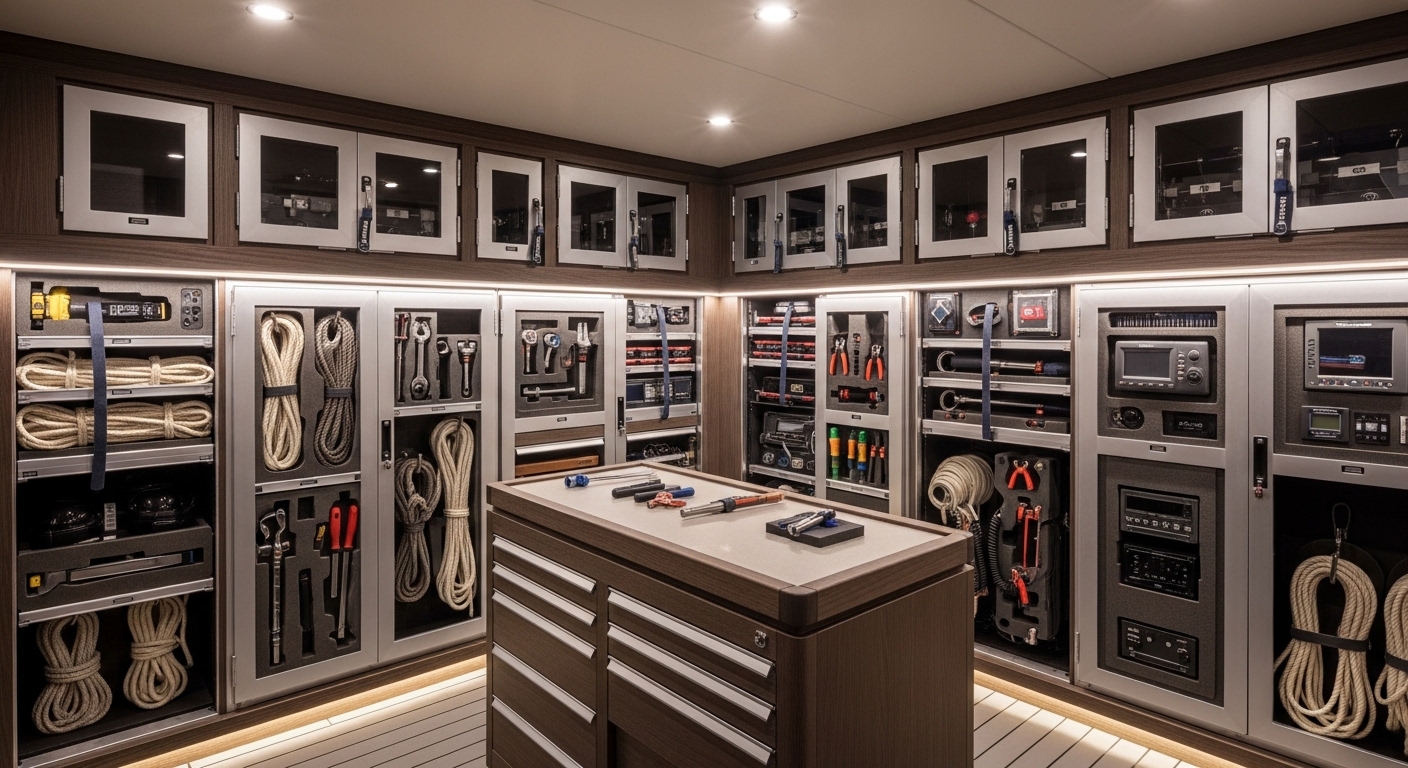
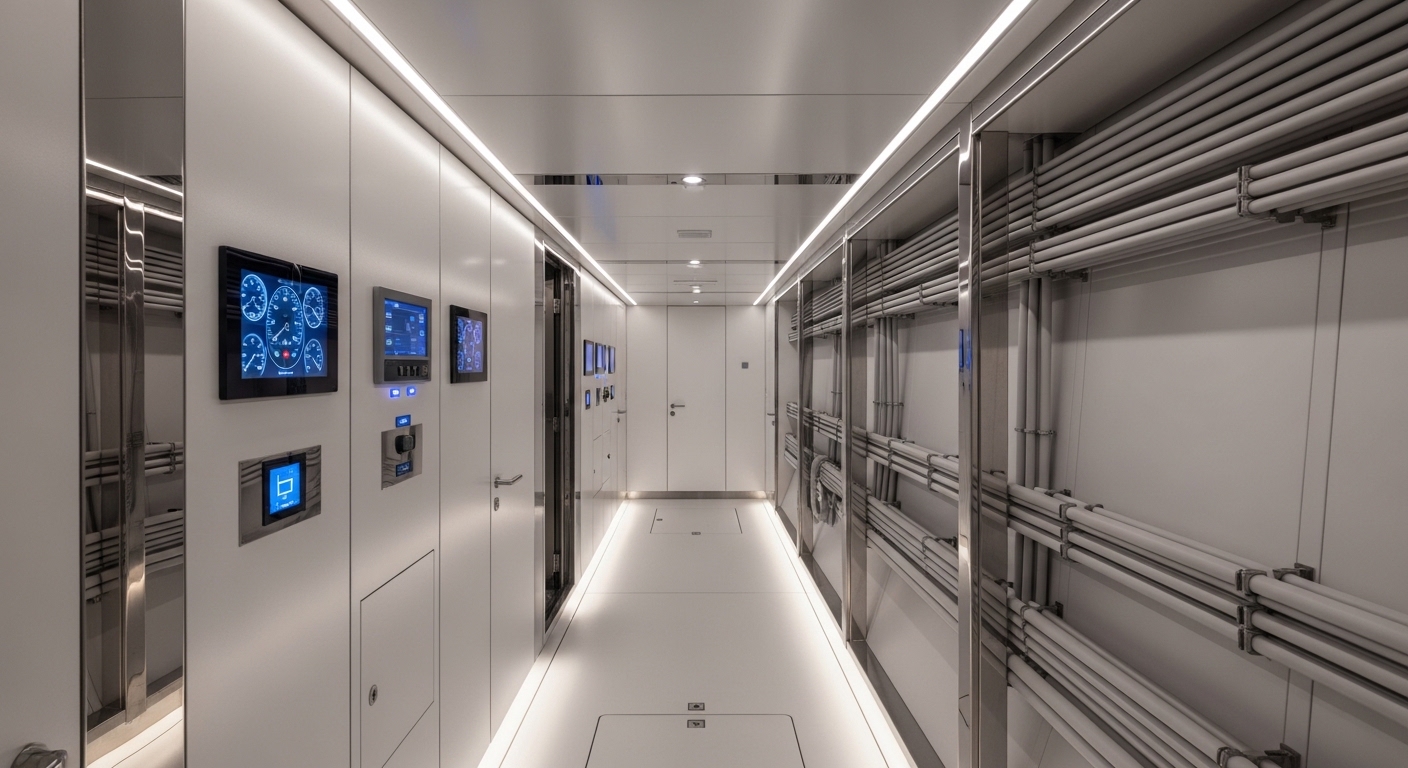
The command and technical domains of Project 226 are treated as sovereign architectural environments. These spaces express the intelligence, discipline, and operational continuity that sustain the vessel’s cultural and residential programs. Technical architecture is not concealed; it is dignified, structured, and integrated into the vessel’s institutional identity.
The command environment is designed for clarity, visibility, and operational authority. Spatial proportion, sightlines, and instrumentation layout support long range navigation and high precision maneuvering across global routes.
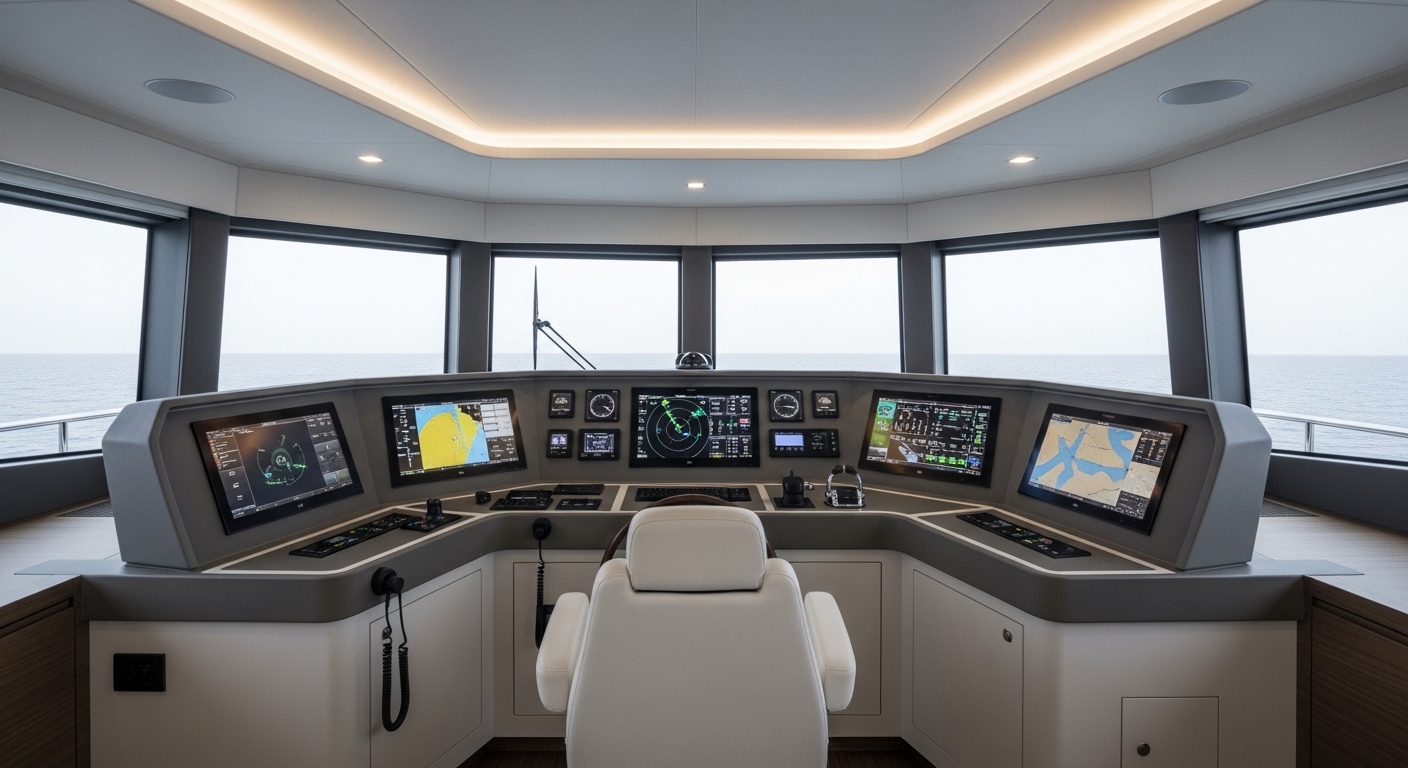
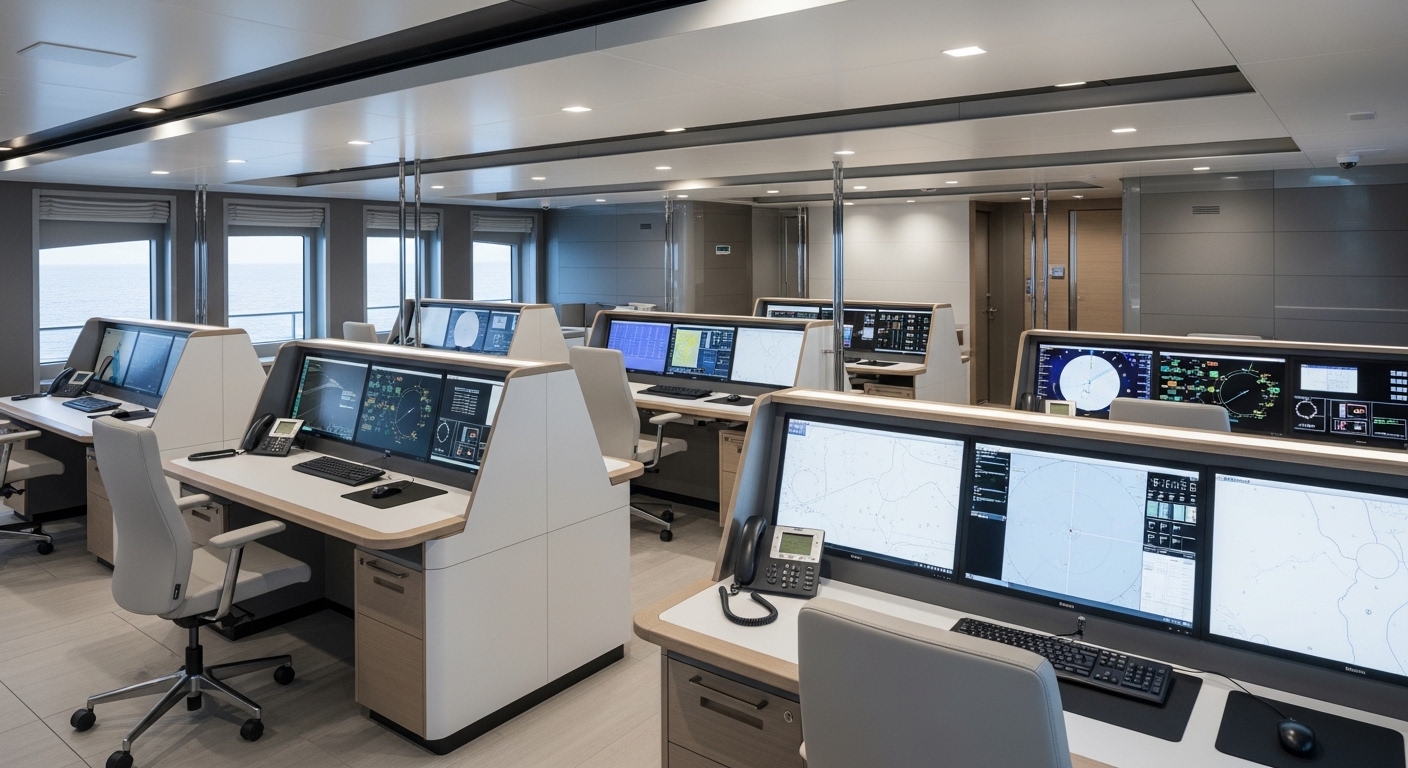
Technical spaces are structured as engineered environments where systems, maintenance, and operational workflows are organized with institutional clarity. These areas reflect the vessel’s infrastructural intelligence and long term durability.
Project 226 operates within a defined cultural governance architecture. The vessel is conceived not merely as a private domain but as a mobile institutional environment capable of hosting, preserving, and presenting contemporary European art at museum grade standards.
The governance framework includes acquisition protocols, conservation standards, rotation cycles, and valuation methodologies aligned with international museum practice. These mechanisms ensure that the Sequential Art Protocol remains coherent, sustainable, and culturally authoritative across the vessel’s operational lifespan.
A curatorial advisory board structure can be activated to oversee long term cultural positioning, collection integrity, and institutional partnerships. This framework situates Project 226 within a broader European cultural ecosystem, enabling cross institutional collaboration and long range cultural diplomacy.
The full institutional dossier for Project 226 is available for executive review. It includes the complete architectural specification, technical envelope, Sequential Art Protocol, cultural governance framework, and shipyard collaboration pathways. This dossier is intended for shipyard partners, institutional stakeholders, and private collectors operating at the highest level of cultural and architectural engagement.
REQUEST THE PROJECT 226 INSTITUTIONAL DOSSIER