Operationally demonstrated baseline
The application must evidence a solution already demonstrated in an operational environment and define a credible pathway from TRL 7 toward TRL 9.

EIT Culture & Creativity · Innovation Projects
What the call wants
The application must evidence a solution already demonstrated in an operational environment and define a credible pathway from TRL 7 toward TRL 9.
Stage 1 develops the Business Development Plan around ownership and licensing, regulation, customer validation, production economics and commercialisation.
EURAN enters through Fashion. The pilot addresses digitalisation, competitiveness and responsible low-inventory production rather than presenting a cross-sector platform as the funded product.
What EURAN proposes
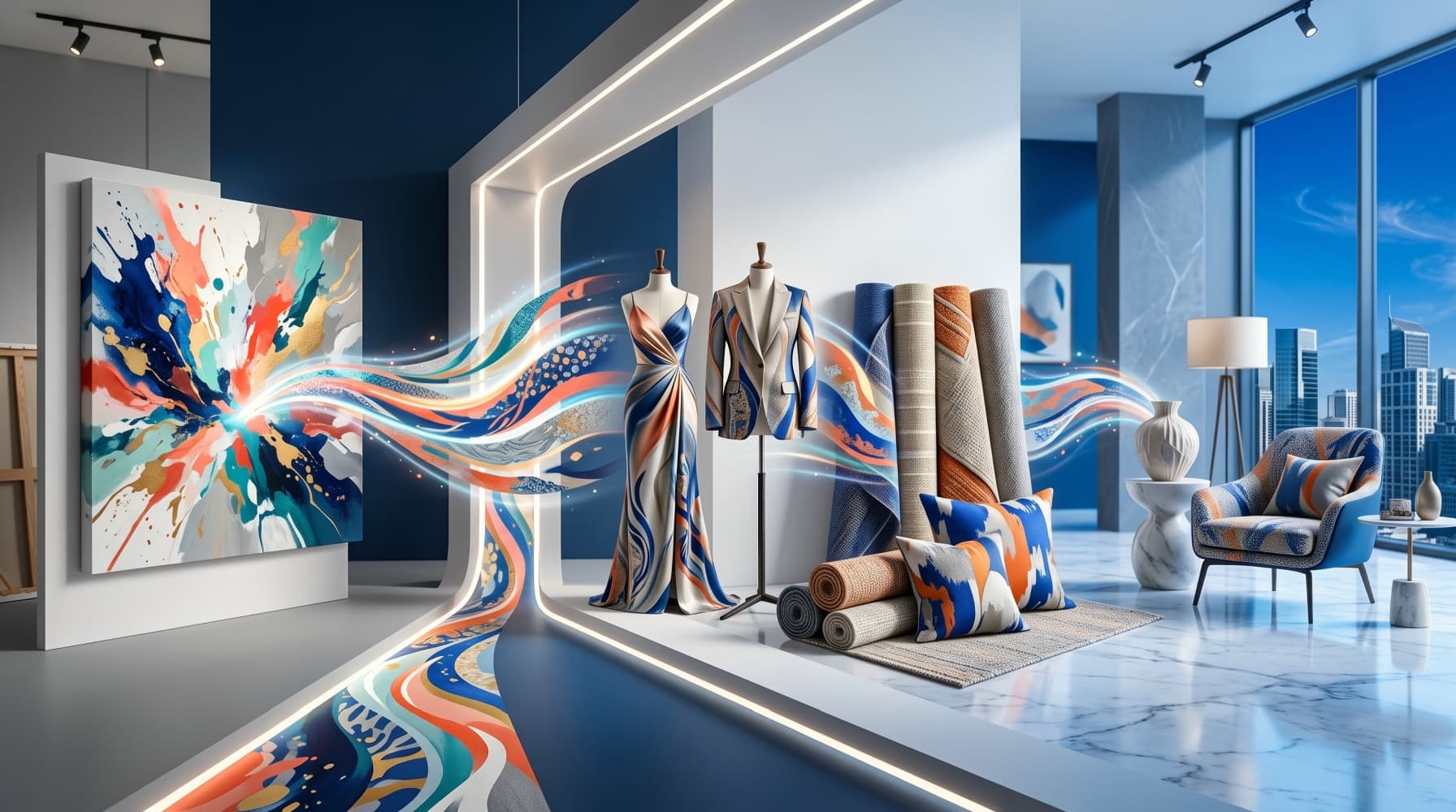
The ART-TO-DESIGN SYSTEM™ is the operating method; Fashion is the Stage 1 product focus and EURAN Network Expansion is the strategic purpose. The artist sources begin with Alexis — Alexandre Mimoglou's artist identity — and Maria Papafili, then expand through current contact and explicit agreements to selected artists from EURAN's historic 300+ artist network. Alexandre Mimoglou acts as the designer and entrepreneur who transforms selected contemporary artworks into new design applications.
The project also creates a disciplined route for auditing approximately 1,000 artworks stored near Stockholm for their artist owners. Physical custody never implies reproduction rights: any design use would require a new permission or licence from the artist or relevant estate.
The existing EURAN configuration-to-production chain provides the operational baseline. Stage 1 does not pretend that every proposed system layer is already complete; it defines, tests and structures the business-development path needed to turn that baseline into a repeatable, rights-aware fashion innovation.
Why EURAN
Alexis — the artist identity of Alexandre Mimoglou — provides one directly controlled contemporary corpus for the Fashion pilot, while Alexandre separately acts as designer and entrepreneur.
Maria Papafili provides the second immediate artist corpus. The system is then designed to reconnect and engage selected members of EURAN's 300+ artist network through current contact, current-status verification and explicit contemporary permissions.
The method has a historic industrial precedent in Alexandre Mimoglou's textile work commercialised through Knoll International Europe. This establishes lineage and delivery credibility; the current TRL claim must still rest on present operational evidence.
EURAN already operates a digital configuration and print-on-demand workflow capable of moving selected designs into physical products and fulfilment.
The wider EURAN asset base demonstrates unusual depth: an established 300+ artist network, approximately 1,000 artworks stored for their artist owners near Stockholm, and more than 2,200 existing product configurations. Stage 1 structures how these assets can be developed responsibly, beginning with rights-cleared contemporary works.
EURAN's wider production history demonstrates long experience converting artistic direction into specifications, production, quality control and delivered physical outcomes.
What Stage 1 develops
The pilot is designed so that each selected work carries authorship, source, rights status, reproduction permissions and product-use conditions. Stage 1 structures and tests the first working register for the focused pilot corpus.
A focused set of fashion and textile applications will be selected from the two living-artist corpora and used to test attribution, configuration, pricing and market response.
Stage 1 will define substrate criteria, an appropriate European print/conversion route, inventory-minimisation rules and a practical approach to leftovers, returns or take-back where feasible.
The Business Development Plan will define target customers, pricing, licensing, sales channels and the profile of the mandatory Stage 2 commercialisation partner.
The pilot will define transparent authorship, attribution and licensing practices and integrate Gender, Equality, Diversity and Inclusion considerations into creator participation and market deployment.
The Stage 1 plan will map the required co-financing and Revenue Sharing Agreement implications before any Stage 2 commitment is made.
From Stage 1 to market deployment
The funded Stage 1 proposition remains within Fashion. The wider EURAN artist network and the Stockholm-held artworks are not treated as automatically usable content: they form the development pipeline and enter only through new permissions. Public-domain historical masterworks remain outside this project because they belong to the separate Spark / Solution 3 venture. They may become later replication or commercialisation routes only after the Fashion system is evidenced and market-ready.
The Stage 2 direction is a compact consortium led by the Stage 1 applicant with a commercialisation partner such as a responsible textile manufacturer, converter, distributor or licensing/market-access operator, plus an optional third participant where justified.
Participation
The concept is being prepared for the 30 October 2026 submission. The final applicant vehicle and legal-form eligibility are being verified before submission. Stage 1 concerns the innovation system and Business Development Plan; it is financially and operationally separated from the 12 October Shape proposal, which concerns venture execution and commercial acceleration. No activity or cost is intended to be funded twice.
EURAN Network Renaissance
EURAN's historical network is established, not erased. The first task is systematic re-contact: who is active, who wishes to return, which estates must be approached, and who wants to license works for the new system.
The physical stock can be catalogued and connected back to its artist owners. Design use begins only after current rights clearance; otherwise the works remain protected physical assets.
Artists create the source works. Alexandre, including when he is also one of the artists as Alexis, is the designer who adapts selected sources into new Fashion and design applications.
OPERATION RENAISSANCE
Solution 2 expands EURAN's living contemporary ecosystem: Alexis, Maria Papafili and potentially the 300+ artists of the historic network, together with the approximately 1,000 artworks stored for some of those artists near Stockholm. Alexandre Mimoglou remains the designer and entrepreneur.
Innovation Projects supports the business-development and validation layer: rights/provenance, artist expansion, configuration, production, responsible commercialisation, TRL evidence and the Stage 2 consortium pathway.
The commercial system creates licences, design adaptations, collections, marketplace sales and B2B programmes for retail, hospitality, cruise, superyachts, real estate and aviation. Artist participation and licensing are negotiated independently of the grant.
CONNECTED EURAN INFRASTRUCTURE
The European proposal is one accelerator inside a wider commercial and intellectual system.
EURAN NEXT · GLOBAL GROWTH
This page forms part of EURAN's expanding portfolio of artistic, design, technical and professional capabilities. Selected capabilities can progress through direct commercial deployment, research and European cooperation, or both — according to the project.