
Premise — Perception as an Operational Variable
Every environment contains two realities:
The Designed Reality — the architectural intent
The Lived Reality — how people actually move, behave, and interpret the space
SPVI bridges these realities by converting observable behavioral patterns—movement, dwell time, clustering, hesitation, and interaction—into structured indicators of Perceived Value.
This is not sentiment analysis.
This is perceptual measurement.
Deep Dive: SPVI™ — Perceptual Governance & Strategic Spatial Intelligence
This Deep Dive introduces the Space Perceived Value Index (SPVI™), the perceptual intelligence layer of the Cultural Operating System (COS™) Presented as a strategic conversation between two abstract commentators, Alexandre and Maria, the briefing explores how multi‑million-dollar environments can be governed through perceptual insights, ensuring experiential clarity, operational coherence, and the preservation of institutional value. Drawing on EURAN’s analytical framework, the discussion demonstrates how SPVI™ transforms observable behavioral patterns into actionable indicators of spatial performance, stabilizing brand equity and enhancing decision-making across complex environments.
Listen to the Executive Briefing
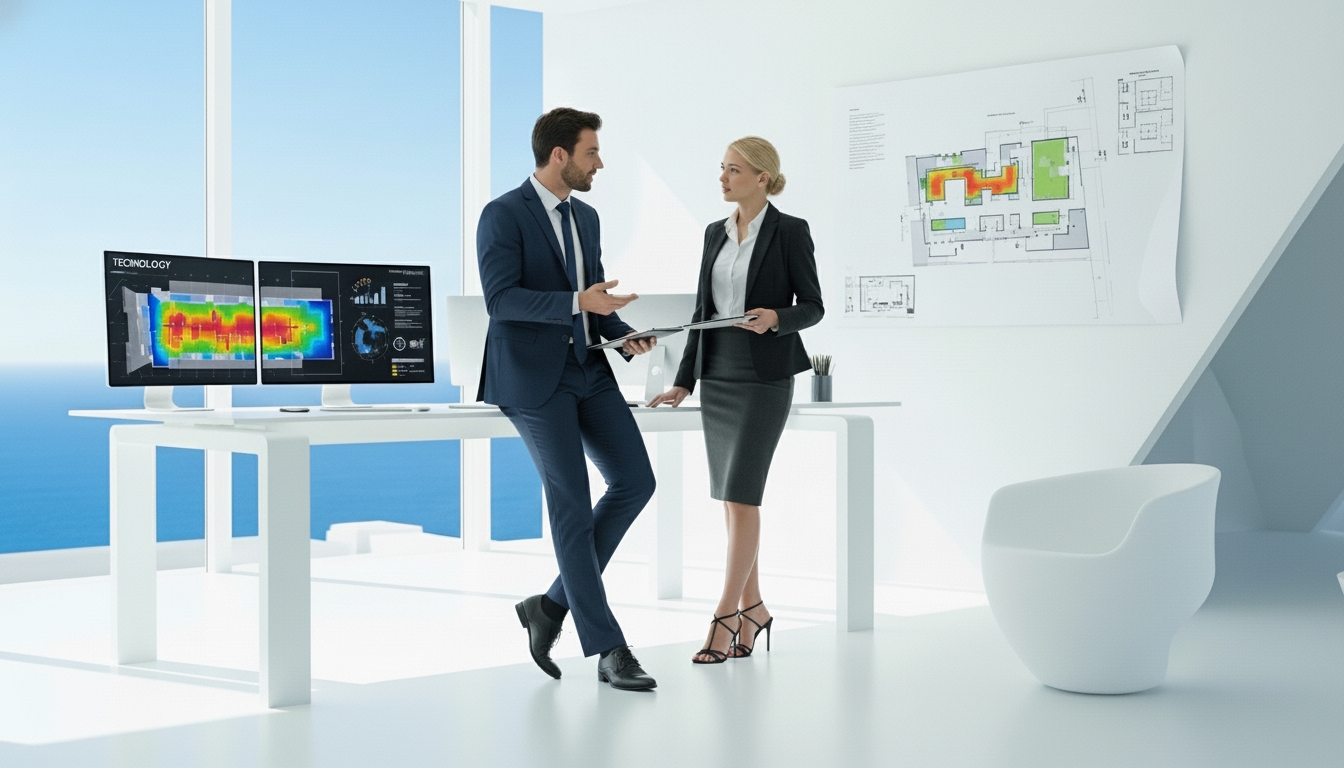
Deep Dive Summary: “SPVI™ — Perceptual Governance & Strategic Spatial Intelligence”
This Deep Dive examines:
- Perceptual Governance — How SPVI™ interprets behavioral patterns to stabilize experiential clarity across complex environments.
- Operational Coherence — Ensuring that spaces perform consistently, protecting the institutional value of high-investment assets.
- Strategic Decision Support — Using spatial intelligence to guide capital allocation, narrative design, and operational sequencing.
- Intervention Modules — How MNIE™, PRA™, CCD™, and DNW™ activate environments to maintain flow, clarity, engagement, and safety.
- From Architecture to Perceptual Governance — Transitioning static built environments into dynamic, responsive, and culturally authored spaces.
Transcript Availability:
The full English transcript of the SPVI™ Deep Dive is available upon request.
Contact: management@euran.com.
Position — The Adaptive Governance Loop
SPVI sits at the center of the COS cybernetic loop. COS–MSF™ authors the environment. Users interact with it. SPVI interprets their behavior as indicators of perceived value. When SPVI detects a variation — a drift, a confusion, a drop in engagement — COS activates one or more of its four intervention modules. The environment adjusts. The loop continues.
This is not optimization. It is cultural governance — a system where meaning, clarity, and identity are continuously aligned with real conditions.
Foundations — The Architecture of Behavior
SPVI is built on a simple principle: behavior is the most reliable proxy for perceived value. Users reveal their perception through movement, dwell time, exploration, clustering, acceleration, avoidance, repetition, and interaction. These patterns form the perceptual architecture of the environment — the invisible structure that determines whether a space feels coherent, meaningful, and alive.
SPVI captures this architecture and translates it into operational signals that maintain the authored identity, coherence, and experiential stability defined in the MSF (Master Strategic Framework).
Mapping — How SPVI Triggers the COS Modules
Each SPVI measurement category activates one or more COS intervention modules. This mapping is the core of the adaptive engine.
Engagement → CCD™ + MNIE™
CCD reinforcements cultural resonance; MNIE re-aligns narrative framing.
Circulation & Flow → DNW™
DNW restores spatial clarity and orientation.
Usage Patterns → CCD + MNIE
CCD strengthens anchors; MNIE clarifies spatial meaning.
Content Interaction → CCD
CCD adjusts programming, placement, and symbolic anchors.
Spatial Coherence → DNW + PRA™
DNW restores legibility; PRA stabilizes emotional clarity.
Value Signals → MNIE + PRA + CCD
Meaning, reassurance, and cultural resonance are recalibrated.
Example — From Measurement to Operational Adjustment
A cruise itinerary is modified due to external conditions. Although operations continue normally, passenger behavior begins to shift: reduced engagement with onboard content, lower participation in activities, and shorter dwell times in key areas.
SPVI detects this variation through behavioral indicators. The system identifies a drop in perceived value linked to loss of narrative coherence and reduced experiential clarity.
COS activates targeted interventions:
- MNIE reframes the journey narrative to align with the new route
- PRA stabilizes passenger perception through clear and reassuring communication
- CCD reinforces onboard engagement with curated cultural content
- DNW adjusts spatial cues and wayfinding to restore clarity and flow
As a result, engagement stabilizes, onboard activity recovers, and the perceived value of the experience is maintained despite the operational change.
The Four COS Intervention Modules — Operational Adjustment in Real Conditions
When SPVI detects a variation in perceived value, COS does not respond with generic fixes. It activates one or more of its four authored intervention modules — each designed to adjust a specific dimension of the environment. These modules operate like instruments in a cultural control room: subtle during normal conditions, decisive during extraordinary ones.
MNIE — Modular Narrative Intelligence Engine
MNIE adjusts the narrative logic of the environment. It ensures that the story users experience remains aligned with real conditions — even when those conditions shift. MNIE intervenes when SPVI detects:
- misalignment between intended meaning and lived perception
- underuse of narrative anchors or symbolic elements
- confusion about the purpose or identity of a space
Operationally, MNIE can reframe the storyline of a deck, reposition symbolic cues, adjust the sequencing of experiences, or strengthen the thematic logic of a transition. In aviation, it may clarify the emotional arc of a cabin. In hospitality, it may reinforce the identity of a lobby. In real estate, it may restore the narrative coherence of an amenity floor.
PRA — Perception & Reassurance Architecture
PRA stabilizes emotional clarity and trust. It intervenes when SPVI detects:
- hesitation, uncertainty, or avoidance behavior
- drops in comfort perception or psychological safety
- environmental ambiguity during operational shifts
PRA adjusts tone, communication, spatial signals, and environmental reassurance. It can soften transitions, clarify expectations, or introduce micro‑cues that restore confidence. In airports, PRA stabilizes passengers during delays. In hotels, it reduces cognitive load in complex layouts. In marinas, it guides visitors through unfamiliar environments.
CCD — Cultural Continuity Deck
CCD maintains cultural resonance and engagement. It activates when SPVI detects:
- drops in content interaction
- weakening of cultural identity
- loss of experiential momentum
CCD adjusts curated content, symbolic anchors, programming rhythms, and cultural touchpoints. It can re‑energize a promenade, strengthen the identity of a lounge, or restore the cultural logic of a gallery. In hotels, CCD reinforces brand identity. In real estate, it elevates amenity value. In cultural institutions, it maintains narrative continuity across exhibitions.
DNW — Dynamic Narrative Wayfinding
DNW ensures spatial legibility and narrative clarity. It intervenes when SPVI detects:
- circulation bottlenecks or inefficient flow
- confusion about orientation or destination
- fragmentation of spatial narrative
DNW adjusts signage, orientation cues, spatial communication, and narrative sequencing. It can redirect movement, clarify transitions, or re‑establish the logic of a path. In cruise vessels, DNW stabilizes deck‑level navigation. In airports, it reduces stress. In mixed‑use real estate, it restores intuitive flow.
Together, these four modules form the operational backbone of COS — the adjustment layer that transforms SPVI insights into authored, real‑time environmental change.
Ordinary Conditions — Micro-Adjustments
During ordinary conditions, SPVI detects subtle variations in engagement, flow, and coherence. COS responds with micro-adjustments that refine the environment without altering its structure.
- re-balancing narrative cues in a promenade or lobby
- adjusting cultural anchors to restore experiential momentum
- clarifying a transition between two spaces
- reinforcing the identity of a deck, lounge, or amenity
- softening the tone of communication during minor delays
These adjustments are invisible to the user but powerful in effect. They maintain coherence, clarity, and cultural presence.
Extraordinary Conditions — Macro-Adjustments
Extraordinary conditions occur when perception drops sharply due to operational disruptions, environmental stress, or narrative breaks.
- reframing the entire narrative arc of a journey or stay
- deploying PRA to restore emotional clarity and reassurance
- activating DNW to redirect flow and reduce stress
- using CCD to re-establish cultural continuity and identity
- re-sequencing experiences to maintain coherence under pressure
Macro-adjustments are not crisis management. They are cultural stabilization — the ability of an authored environment to remain coherent even when conditions shift dramatically.
SPVI Across Industries
SPVI applies wherever space, culture, and perception intersect — cruise, hotels, aviation, real estate, marinas, cultural infrastructures, and more.
In cruise, SPVI stabilizes perception across itineraries and seasons. In hotels, it maintains identity and clarity across fluctuating occupancy and guest profiles. In aviation, it governs legibility and reassurance under time pressure. In real estate, it elevates amenity value and spatial coherence. In marinas and cultural infrastructures, it ensures continuity between movement, orientation, and identity.
The measurement logic remains universal; only the operational context changes. In all cases, SPVI ensures that environments maintain their perceived value, supporting engagement, operational efficiency, and revenue stability.
Infrastructure Integration
SPVI integrates with existing digital systems already deployed in complex environments, including:– spatial monitoring and analytics systems– digital signage and content platforms– lighting and acoustic control systems– venue-level operational and management platforms
Implementation is non-intrusive and requires no structural modification.
This is cultural activation, not renovation.
Implementation — From Insight to Adjustment
SPVI is deployed through a modular, non-intrusive process that integrates seamlessly with existing environments, operational realities, and industry constraints. Implementation is not renovation. It is cultural activation — the orchestration of identity, clarity, and experience through authored adjustments guided by SPVI.
Deployment can begin within weeks, starting with selected zones or environments, and scaling progressively without disruption to ongoing operations.
The process follows a structured sequence:
- baseline SPVI measurement of current conditions
- identification of perceptual variations and critical zones
- selection and activation of the relevant COS modules
- deployment of targeted authored adjustments
- stabilization, monitoring, and continuous refinement
This sequence is discreet, fast, and compatible with complex operational environments — from vessels and hotels to terminals, marinas, and cultural infrastructures.
Next Step — A Strategic Invitation
SPVI transforms environments into adaptive cultural systems. It ensures that meaning, clarity, and identity remain aligned with real conditions — continuously, intelligently, and without disruption. It is the missing layer between design intent and lived experience.
In environments where conditions shift rapidly, the ability to measure and adjust perception in real time becomes a strategic advantage.
If you wish to explore SPVI for your environment, vessel, hotel, terminal, or cultural infrastructure, we can offer a concise 20-minute strategic briefing to present:
- The SPVI measurement architecture
- The COS intervention modules
- Implementation paths across industries
- Immediate opportunities for selected environments