
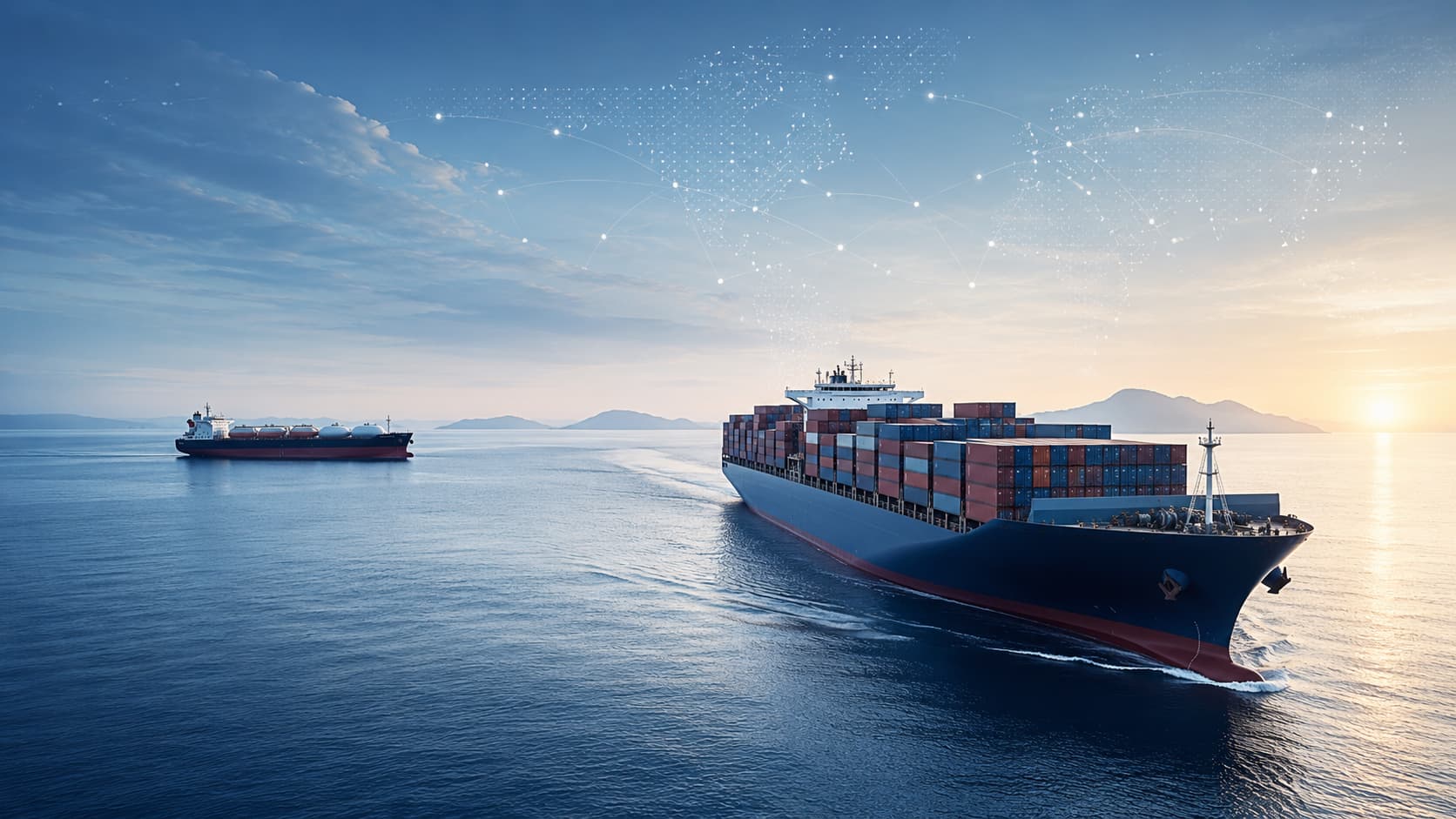
Commercial Shipping as Cultural Infrastructure
Commercial shipping is often described through tonnage, routes, fuel, compliance, logistics, ports, chartering, finance and operational efficiency. All of this is essential. But it is not the whole reality.
A commercial fleet is also a cultural and human system. It carries the history of families, companies, ports, crews, flags, routes, technical disciplines and maritime memory. It connects continents while remaining largely invisible to the public imagination.
EURAN’s commercial shipping framework does not propose decoration of industrial assets. It proposes a cultural, aesthetic and human layer that can support identity, dignity, communication, memory and stability across the commercial maritime universe.
This framework can apply to MSC’s commercial maritime world and to Greek shipowners operating containers, tankers, LNG, LPG, dry bulk, offshore support and mixed fleets.
Commercial Shipping System
This operational hub belongs to EURAN’s wider marine system. It connects the commercial-shipping landing page, the theoretical report, the flagship fleet-scale offer, the corridor-visibility offer, and the master COS™ framework.
- Marine Cultural Intelligence Hub: the top marine gateway connecting Commercial Shipping, Cruise and Superyachting.
- The Art Commercial Shipping Network: the commercial-shipping industry landing page.
- Marine Cultural Intelligence — Shipping Edition: the theoretical report in nine chapters.
- Greek Shipping CCPI™ Index: the anonymized CCPI™ cultural-visibility index for Greek and Greek-related commercial shipping.
- Shipping Embassies: Embassy Vessel Status for commercial fleets.
- Project Straits: visibility management for strategic maritime corridors.
- COS™ — Cultural Operating System: the master framework behind EURAN’s maritime deployments.
Why This Platform Exists
Commercial shipping companies are no longer only fleet operators. They are global institutions.
They operate vessels, offices, ports, terminals, digital systems, training cultures, archives, family histories, crew networks, executive spaces and public reputations.
They must speak simultaneously to owners, charterers, banks, shipyards, crews, regulators, ports, partners, media, families, insurers and the wider public.
A company of this scale requires cultural coherence. Not branding in the superficial sense, but a deeper continuity of identity, discipline, memory and human dignity.
EURAN helps articulate that cultural layer through text, art, visual references, archives, spatial readings, atmosphere concepts and discreet strategic memoranda.
The 8 Practical Fields
Each page is a practical entry point for a different commercial-shipping concern.
01 • Ownership Maritime Identity
For owners, chairmen, family offices and executive leadership seeking to articulate the company’s maritime identity and long-term cultural continuity.
02 • Commercial Fleet Cultural Coherence
For fleet, technical and executive teams seeking coherent identity across vessel types, ship classes and corporate maritime assets.
03 • Crew Spaces, Dignity & Human Continuity
For companies seeking to support crew dignity through cultural attention to onboard living, rest, memory and human atmosphere.
04 • Ports, Terminals & Logistics Environments
For terminal, port and logistics environments where industrial scale can be made more legible, dignified and culturally coherent.
05 • Corporate Offices & Executive Environments
For headquarters, boardrooms, reception areas and family-office environments representing maritime identity.
06 • Fleet Heritage, Archives & Maritime Memory
For owners and companies wishing to preserve and express archives, ships, routes, family memory and maritime history.
07 • Digital, Editorial & Institutional Communication
For communications and executive teams seeking more culturally intelligent institutional narratives.
08 • Cultural Stability, Crisis Atmosphere & Resilience
For sensitive periods involving disruptions, geopolitical tension, crew anxiety, public scrutiny or institutional uncertainty.
Suggested Navigation by Company Function
- Owners / Family Office / Chairmen: Pages 1, 5, 6, 8
- Executive Leadership: Pages 1, 2, 5, 7, 8
- Fleet / Technical / Marine Operations: Pages 2, 3, 4, 8
- Crew / HR / Welfare: Pages 3, 5, 7, 8
- Ports / Terminals / Logistics: Pages 4, 7, 8
- Communications / Institutional Affairs: Pages 1, 6, 7, 8
- Archives / Heritage / Foundations: Pages 1, 6, 7
- Corporate Real Estate / Offices: Pages 5, 6, 7
What This System Is Not
This system is not naval architecture, marine engineering, shipping operations, crewing management, safety consulting, legal consulting, insurance, chartering, compliance, logistics management or technical advisory.
EURAN’s contribution remains cultural and aesthetic: identity, memory, dignity, atmosphere, visual coherence, editorial intelligence, symbolic continuity and the human dimension of commercial shipping.
Private Strategic Discussion
This commercial-shipping system can be shared with MSC’s commercial maritime leadership, Greek shipowners, family offices, fleet managers, technical teams, communications departments and corporate-environment teams.
The first conversation may begin with one practical page or with a broader question: how should a commercial maritime company express its identity, culture and human dignity across vessels, offices, ports, archives, communication and crisis-sensitive contexts?